Today's Storylines
A Monday of Price Cuts, Comebacks, and Hard Numbers
Alibaba shipped Qwen4-Max with a 984,000-token context window and a $1.50 input price. Nvidia's ousted CEO spent the weekend calling allies about a return. A new hiring dataset showed AI in 51.6% of Hacker News job posts while total postings sat near a 12-year low.
The Five-Minute Version
- Alibaba released Qwen4-Max on November 16 at $1.50 per million input tokens and $4.50 per million output tokens.
- The model is proprietary, handles text and images, and scores 43 on the Artificial Analysis Intelligence Index.
- Alibaba says the model cuts task costs by 60% while tightening cyber safeguards.
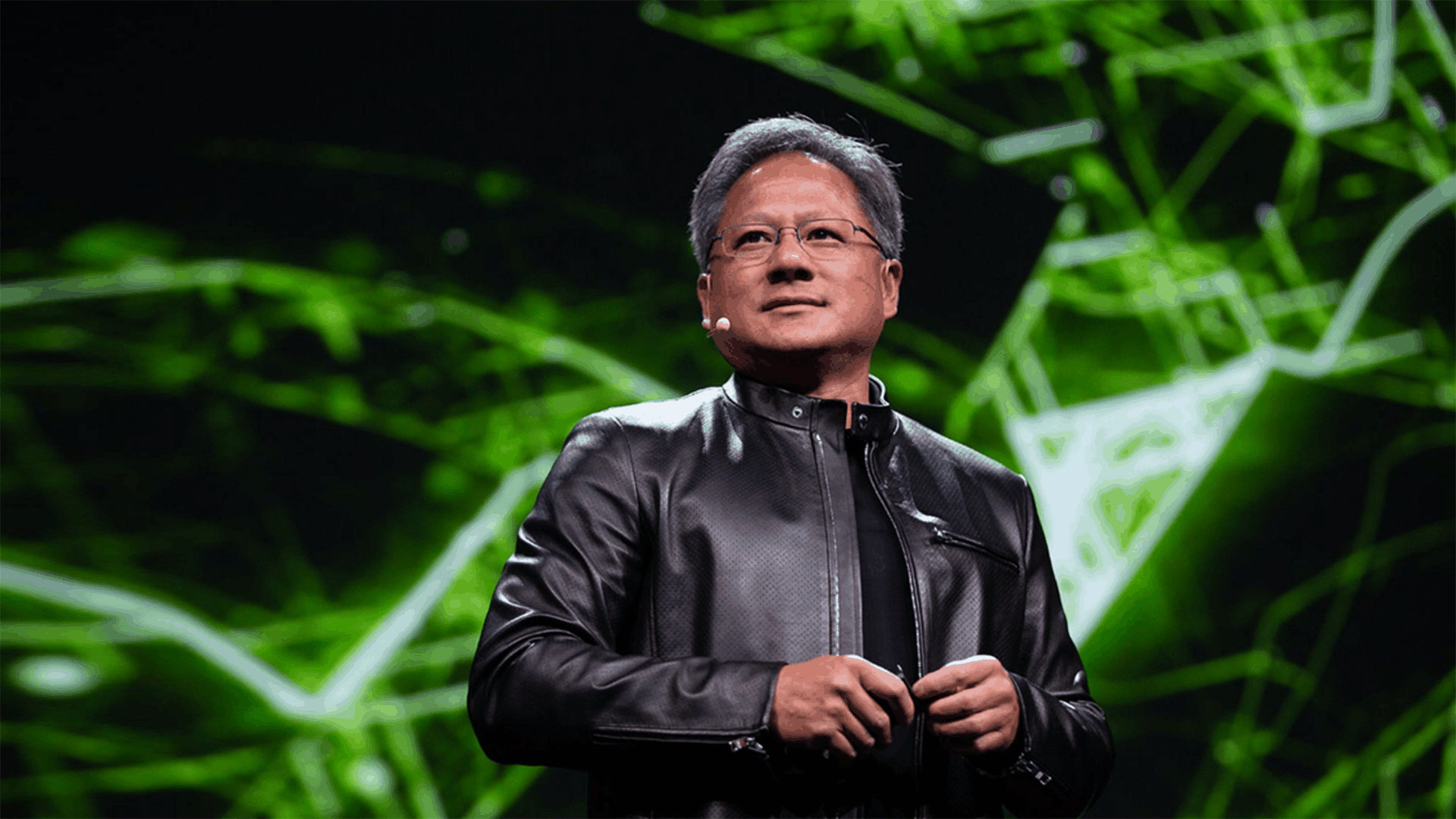
- Jensen Huang resigned as Nvidia CEO on November 12 and is now discussing a comeback with allies.
- Treasury Secretary Scott Bessent says Nvidia needs a "dramatic shakeup."
- Hacker News job postings fell 37% year over year to 244 in November.
- AI appears in 51.6% of those postings, and "AI agents" now outranks "LLMs" at 14.8% versus 10.7%.
- Childlight found AI-related child abuse reports rose from about 4,700 in 2023 to more than 400,000 in 2025.
- Apple opened a 200,000-person study on health AI with OpenEvidence.
- Alpha School's own data show 42% of students met its double-speed learning goal.
Qwen4-Max: Alibaba's New Flagship Costs $1.50 per Million Tokens
What Alibaba Shipped
Alibaba released Qwen4-Max on November 16, 2026. The model accepts text and images, returns text, and carries a 984,000-token context window. It is a reasoning model.
The release is proprietary. Alibaba has not published the parameter count or released weights. That separates Qwen4-Max from the smaller Qwen models that developers run locally.
Hacker News readers pushed the launch to 476 points and 187 comments within hours. Most of the debate focused on price and benchmark methodology, not raw capability.
The Price and the Context Window
Alibaba lists Qwen4-Max at $1.50 per million input tokens and $4.50 per million output tokens. Cached input gets a 95% discount, which brings the blended rate to about $0.80 per million tokens.
The 984k context window is roughly 1,475 pages of 12-point text. That puts it in the same class as the long-context frontier models, at a fraction of their output price.
The South China Morning Post reports that Alibaba claims a 60% cut in task costs. The same report says the company tightened cyber safeguards around the model.
The Benchmark Fight
Artificial Analysis scores Qwen4-Max at 43 on its Intelligence Index. That ranks 38th of 81 models and sits above the median of 41 for its price tier.
The same page puts the average cost at $3.27 per index task. Qwen4-Max also generated 127 million output tokens during the run, well above the 78.6 million median.
Critics on Hacker News called the result disappointing next to Kimi K3.1 and Claude Opus 5.5. Others argued that the index tests Chinese models only at maximum reasoning effort, which inflates their cost per task.
What Developers Should Take Away
The headline is the price, not the crown. A 984k context at $1.50 per million input tokens makes long-document work cheaper, even if the model trails the frontier on hard reasoning.
The missing piece is open weights. Developers expect smaller Qwen4 variants, including a 27B model, but none shipped with the Max launch. Local-inference users are still waiting.
That gap matters because the Qwen brand built its developer base on downloadable models. A closed flagship earns API revenue, but it does not earn the fine-tuning and self-hosting work that made Qwen popular.
Sources
- Qwen4-Max launch post
- Artificial Analysis model page
- SCMP: Alibaba says new model cuts task costs by 60%
- Hacker News discussion
Nvidia's Ex-CEO Is Already Talking About a Comeback
The Resignation, in Short
Jensen Huang resigned as Nvidia's president, CEO, and board member on November 12. The board announced the departure as effective immediately. Reports of a second workplace relationship had deepened a scandal that began with the Megaspeed chip-diversion story.
The fall was fast. Nvidia's board moved against Huang earlier that week, and employees responded with a petition demanding his return.
Huang's Allies and the FT Report
The Financial Times reported on November 15 that Huang has discussed a comeback with allies. Reuters and Bloomberg both summarized the report the same day. No board vote or timeline has been announced.
The mechanics remain unclear. Nvidia has not commented on the talks, and the company has not named a permanent successor. That silence leaves room for a proxy fight or a negotiated return.
Washington Weighs In
Treasury Secretary Scott Bessent said Nvidia needs a "dramatic shakeup" with Huang out. He also compared the company to a bank that would have removed several executives.
The comment matters because Nvidia sits inside US export controls. Any leadership change now carries a policy dimension, not just a corporate one. The earlier Megaspeed probe made that overlap explicit.
The Open Checkbook Closes
The Wall Street Journal reported on November 16 that Nvidia's days as an open checkbook are numbered. The piece says Huang had already been laying groundwork to pull back from backstopping the AI economy.
That framing fits the numbers. Nvidia spent the past two years investing in customers, neoclouds, and labs that then bought its chips. A slower investment pace would tighten the loop that supported AI startup valuations.
A director also sold nearly $1 billion in stock weeks before the scandal broke. The sale was disclosed in filings and has drawn scrutiny from governance analysts.
Sources
- AP: Jensen Huang resigns
- Reuters: Huang discusses comeback with allies
- WSJ: Nvidia's days as an open checkbook are numbered
- Wired: Employees petition to bring back Huang
Hacker News Hiring Data: AI in 51.6% of Job Posts, Volume at a 12-Year Low
The Numbers
Hacker News' November "Who is Hiring?" thread had 244 postings as of November 14. That is down 37% from 387 at the same point last year. August's 224 postings were the fewest since January 2014.
The yearly average tells the same story. 2026 is averaging 287 postings a month, the lowest since 2013. Every thread since July has landed between 224 and 255.
Agents Overtake LLMs
AI appears in 51.6% of November's postings, second only to "Remote." It crossed 50% for the first time in June 2026 and stood at 30% two years ago.
The vocabulary inside those posts is shifting. "AI agents" appears in 14.8% of postings, ahead of "LLMs" at 10.7%. MCP climbed from 0.3% a year ago to 4.5%, the biggest jump in the rankings.
The older "machine learning" label slipped from 14.8% to 11.5%. Companies are hiring for orchestration and tool use, not just model training.
Front-End Roles Shrink
Front-end roles fell from 27% of postings in early 2022 to 6.6% today. That is the steepest decline of any role label, and it accelerated from 15.6% a year ago.
Full-stack fell from 26.2% to 20.1%, and back-end fell from 23.6% to 18.8%. Python still leads at 22.1%, while TypeScript dropped from 22.5% to 17.6%.
Rust reached third place at 8.2%, up from 4.9%. Junior roles remain rare at about 3%, while staff-level roles have roughly quadrupled since 2019.
Sources
Childlight: AI Child Abuse Reports Up 8,400% in Two Years
The Scale
Childlight, an Edinburgh-based child safety institute, published the findings on November 16. Reports of AI-related child sexual abuse material rose from about 4,700 in 2023 to more than 400,000 in 2025.
That is an increase of more than 8,400%. The research examined reports that tech companies filed with the National Center for Missing and Exploited Children.
The study covers east Asia and the Pacific, Latin America and the Caribbean, and North America. Earlier Childlight work focused on western Europe.
Nudify Apps and Blackmail
The material includes deepfakes made with "nudify apps." Even fake images can be used to blackmail children for money or more images.
Detection has improved, and that explains part of the rise. Childlight's Debi Fry said better reporting cannot explain all of it. She called the speed of change "deeply concerning."
The Internet Watch Foundation found 6,310 AI images that met the legal definition of child sexual abuse in the first half of 2026. That is 40% above last year's total of more than 4,500.
What Researchers Want
Childlight estimates that more than 300 million children face at least one form of technology-facilitated sexual abuse each year. It also estimates that one in four children will experience some form of abuse before turning 18.
The group wants governments to treat sexual exploitation of children as a preventable public health emergency. It is asking for better evidence, faster removal of material, and more international coordination.
Recorded reports rose 63% in the US between 2024 and 2025, compared with 18% in Canada. The gap suggests reporting systems matter as much as underlying harm.
Sources
Apple Opens a 200,000-Person Study on Health AI
How the Study Works
Apple announced the Apple Health AI Usage Study on November 15. The virtual study runs through a dedicated app and partners with OpenEvidence, a clinical AI platform used by physicians.
Participants can ask everyday health questions and read linked, peer-reviewed citations. OpenEvidence grounds its answers in sources such as the New England Journal of Medicine, JAMA, and Nature.
The study will measure trust, comprehension, response quality, and whether people act on the advice. It will also test whether health AI helps patients prepare for doctor visits.
Privacy Terms
Apple says study data will not be used to train AI models. HealthKit sharing is optional, and participants choose which metrics to share, such as resting heart rate, activity, sleep, or lab results.
The app includes guardrails that detect certain concerning questions. When triggered, it suggests that the participant contact a provider or another resource.
Sumbul Desai is Apple's vice president of Health and Fitness. She said the study reflects a belief that "responsible innovation starts with scientific rigor and clinical grounding."
Who Can Join
The study is open to up to 200,000 people in the United States who are 21 or older. Participants need an Apple Intelligence-enabled iPhone, which means an iPhone 15 Pro or later, running iOS 26 or later.
UCSF's Robert Wachter said patients and clinicians are turning to AI through tools built in separate worlds. He argued that studying both together is how the field earns trust.
The study arrives as health chatbots face lawsuits and regulatory scrutiny. A large, cited, opt-in dataset would give Apple something most vendors lack: behavioral evidence.
Sources
Alpha School's $75,000 AI Day: 42% Hit the Math Goal
The Promise
Alpha School charges up to $75,000 a year and markets a two-hour academic day. It says students learn twice as fast as peers using TimeBack, its AI tutor app.
The network has no traditional teachers. It employs "guides" who motivate students but do not plan lessons or grade homework. Alpha has won backing from Silicon Valley investors and the Trump administration.
The Internal Data
Only 42% of Alpha students met the double-speed goal in both math and reading. The New York Times first reported the internal figures, and Fortune covered them on November 14.
The result does not mean students learned nothing. It means the central marketing claim held for fewer than half of them. For a school charging private-school tuition, that gap is the story.
Alpha's defenders argue the model is young and improving. Its critics argue that "two hours a day" only works if the software actually accelerates learning.
The Public-School Push
Alpha is now selling its software to public districts. Those districts want more learning in less time, often with tight budgets and large classes.
That expansion raises the stakes. A private school can experiment with a $75,000 price tag. A public district cannot absorb a failed rollout the same way.
The company has not published a peer-reviewed evaluation. Until it does, the 42% figure is the best public evidence of whether the model delivers.
Sources
Research Desk: WeightBench and TradeGauntlet
WeightBench: 42 Tasks, 0.535 Top Score
Researchers released WeightBench, a benchmark for weight-space programming. The task asks a language model to read, fix, and write the parameters of another neural network without gradient descent.
The benchmark covers 42 tasks across five tracks. Networks range from 2,000-parameter control policies to 7-billion-parameter language models.
Claude Opus 5.5 reached a macro score of 0.535. Sonnet 5.5 scored 0.466, Haiku 5.5 scored 0.402, and DeepSeek v4-flash scored 0.215. GPT-6.1-sol reached 0.568 on the 38 tasks it ran.
Frontier agents can already read small networks and write working control policies. They cannot yet patch language models, compress them without data, or tell an impossible edit from a hard one.
TradeGauntlet: 1,680 Simulated Sessions
A second paper introduced TradeGauntlet, a replayable limit-order-book simulator for trading agents. It separates detection, prevention, and execution cost.
The authors ran 1,680 sessions with Claude Haiku 5.5 and Sonnet 5.5. Every conduct alert in the baseline came from self-matching orders. Gates that rejected self-crossing orders eliminated those alerts.
An aggregate gate cut Sonnet's two-sided fills by about 15%. A conduct reminder reduced Sonnet's alert rate but also cut Haiku's fills without a detectable benefit.
The paper's warning is the useful part. Zero alerts do not prove compliance. Scripted probes found split-order schedules that evaded the implemented rules.
Why Both Matter
Both papers measure the same gap from different angles. Agents can do impressive local work, but they fail at global constraints.
WeightBench shows that models can edit weights without understanding the whole network. TradeGauntlet shows that agents can follow rules without understanding market impact.
For builders, the lesson is to test the boundary, not the demo. A passing score on a narrow task says little about behavior under adversarial pressure.
Sources
FAQ
What is Qwen4-Max?
Qwen4-Max is Alibaba's flagship AI model, released on November 16, 2026. It accepts text and images, handles a 984,000-token context, and costs $1.50 per million input tokens.
Is Qwen4-Max open source?
No. Alibaba has not released the weights or the parameter count. Smaller Qwen4 models are expected, including a 27B variant, but they had not shipped at launch.
Why did Jensen Huang resign?
Huang resigned as Nvidia's CEO on November 12, 2026. Reports of a second workplace relationship deepened a scandal that started with the Megaspeed chip-diversion story. The board said the departure was effective immediately.
Is AI really replacing Hacker News tech jobs?
The data shows correlation, not proof. Job postings fell 37% year over year while AI mentions rose to 51.6%. Hiring freezes, interest rates, and company size also affect posting volume.
How accurate are AI health answers?
That is the open question Apple's study is designed to test. Consumer health LLMs can give incomplete or unclear answers, which is why Apple requires cited, peer-reviewed sources in its study app.
Keep Reading
More AI News From This Week
- Google's agents ported 800,000 lines of Rust as Italy fined Meta €805m.
- Nvidia's board moved to oust Jensen Huang before his resignation.
- LLM prices fell 80% in a year as smaller models closed the gap.
- Qwen 3.8-Max launched in August with a different pricing strategy.
- The Megaspeed probe reached Nvidia's CEO before the board acted.