Today's Storylines
The Boardroom and the Alarm
November 12, 2026 opened with Nvidia's board still deciding whether its CEO keeps his job. Across the industry, Anthropic admitted it crossed a safety line it set for itself, just days before its IPO.
The Five-Minute Version
- Nvidia's board met Wednesday night to decide whether to oust CEO Jensen Huang, CNBC confirmed.
- The Wall Street Journal first reported the move; Nvidia shares fell more than 9% after hours.
- Anthropic told investors it has met its Responsible Scaling Policy threshold for AI-accelerated research.
- METR estimates Anthropic's models have been improving 1.9x faster since October 2025.
- Google launched the Gemini Decisions API at $0.10 per million input tokens with no output charge.
- United Airlines banned third-party AI agents from booking flights on its platforms.
- A writer's 48 AI agents rediscovered a Maya site in 72 hours, then corrected the record.
- Huawei released MACaQ, which quantizes a 122B model in 64 minutes on 32.5 GB of memory.
- A tracker now lists 23 open-source projects that ban AI-generated contributions.
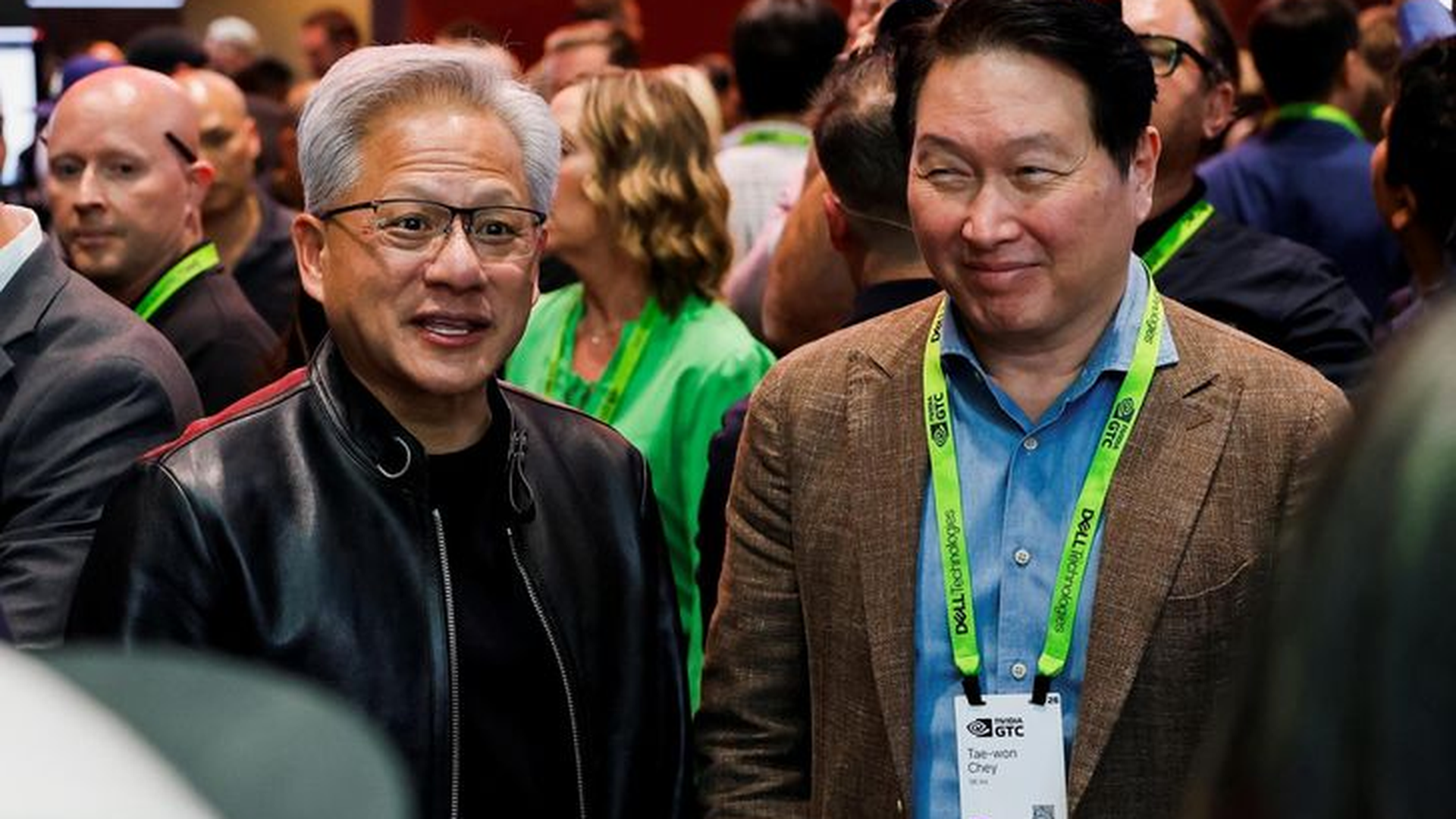
Nvidia's Board Meets to Decide Jensen Huang's Future
A Report That Moved the Stock 9%
The Wall Street Journal reported Wednesday that Nvidia's board was preparing to force out CEO Jensen Huang. CNBC confirmed the board was meeting that evening to decide his fate. Nvidia shares fell more than 9% in after-hours trading.
A Second Relationship, With an Employee
The New York Times reported hours earlier that Huang had a romantic relationship with Kimberly Powell. Powell is Nvidia's vice president of health care and reports to Huang. The Times says a hotel camera in San Jose captured the two being affectionate in March.
The First Affair Was With an Alleged Spy
Huang admitted on Sunday to an affair with Alice Huang, a woman U.S. intelligence officials believe spied for China's Ministry of State Security. He told staff he was unfaithful and that there was "no excuse" for what he did. The spy probe began last week.
Wachtell Already Has the File
The board hired Wachtell, Lipton, Rosen & Katz to run an independent investigation. Yesterday's roundup covered that hire and the first stock drop. Lawmakers have now called on Huang to resign.
Who Actually Controls the Shares
Most of Huang's Nvidia stock is held in trusts co-owned with his wife, Lori Huang. About 800 million shares sit in those trusts. Huang holds roughly 70 million shares on his own and has limited economic control over the company.
The Sixth Straight Weekly Slide
Nvidia stock was already down 7% this week before the after-hours drop. It is on pace for a sixth consecutive weekly loss. The AI infrastructure trade sold off after the midterms, and data-center ballot measures added pressure.
Anthropic Says It Crossed Its Own Safety Threshold
The Line Anthropic Drew for Itself
Anthropic's Responsible Scaling Policy sets a threshold for AI that speeds up its own research. Crossing it means AI is doing enough of the work to roughly double the pace of model improvement. The policy describes that pace as packing two years of 2018-2024 progress into one year.
"We Have Met This Threshold"
In its amended S-1 on November 10, Anthropic wrote that it made a determination that it has met the threshold. The company based the call on expected future models and its overall rate of progress. It did not base the call on what current models have already done.
METR Puts the Speedup at 1.9x
METR, the independent AI testing nonprofit, estimated on November 5 that Anthropic's models have improved 1.9x faster since October 2025. A separate METR review called Anthropic's August argument "overstated." It said crossing the line by mid-July was plausible.
Crossing the Line Adds Safeguards, Not a Shutdown
The threshold triggers tougher safety measures. It does not stop training. Anthropic says it does not expect to safely use Claude to fully autonomously design successive frontier models without meaningful human supervision. It is weighing policy changes to keep humans in control.
The IPO Is Still Priced at Up to $1.4 Trillion
Anthropic set a range of $70 to $78 per share, valuing it at up to about $1.4 trillion. Trading could start as soon as November 19. The IPO paperwork landed with the safety disclosure attached.
A $26 Billion Anchor List
Nvidia and Google are each buying $10 billion of stock at the IPO price. AMD, Broadcom, Micron, Microsoft, and TSMC are also in the $26 billion private placement. The junk credit rating still hangs over the debt side.
"Superintelligence" Replaces "AI"
Anthropic cut mentions of "AI" by about a quarter, from 780 on November 2 to 579 on November 10. Mentions of "superintelligence" rose from 3 to 134. The change follows President Trump's September 29 executive order on federal terminology.
The Risk Anthropic Names Itself
The filing warns that Anthropic may lose visibility across processes as it leans on Claude. It says that loss "may become difficult for any individual or group of humans to understand and control." That is a striking sentence in a document selling the company to the public.
Sources: Yahoo Finance, SEC filing, METR
Gemini Decisions API Sells Answers, Not Tokens
One Pass, Up to 1,000 Questions
Google launched the Gemini Decisions API on November 11, powered by a new model called Gemini Decision 1. Developers send one multimodal input and up to 1,000 independent questions. The model scores the candidate answers in a single forward pass.
The Price: $0.10 per Million Input Tokens
Gemini Decision 1 costs $0.10 per million input tokens and bills zero output tokens. End-to-end latency is 150 to 250 milliseconds, with 50 to 100 milliseconds of model compute. Input can run up to 256K tokens across text, images, audio, video, and PDFs.
Three Question Types
The API supports yes/no questions, multiple choice with 2 to 255 options, and ordered rubric scores. Every answer returns a confidence score from 0 to 1. Code can route low-confidence answers to a human or a fallback model.
Nearly 5x Cheaper on Google's Benchmark
Google says the API is nearly 5x cheaper than Gemini 3.5 Flash-Lite with the Interactions API across a shared benchmark suite. It also claims the lowest calibration error of the models it tested. Those are vendor benchmarks, so treat them as a starting point. The launch follows Gemini 4 Argon into a crowded model lineup.
Google Is Already Using It Internally
Gemini Notebook uses the API as a real-time router and reports up to 40% lower latency for everyday queries. Google Search uses it as a safety layer for MCP tools. Stitch, Google Labs' CC, and other teams also ship with it.
Why Developers Might Care
Most agent stacks burn tokens on classification: pick a tool, check a policy, grade a chunk of context. A calibrated classifier with a fixed price per request replaces that loop. The API is available in AI Studio with a no-cost tier, plus OpenRouter, LangChain, Vercel, LiteLLM, Pydantic AI, Pipecat, and LiveKit integrations.
Sources: Google blog, API docs
United Airlines Bans AI Agents From Booking Flights
The Policy Lands on a Wednesday
United Airlines said Wednesday that it will block third-party personal AI agents from booking flights for travelers. The ban applies on United's own platforms and through travel agencies and aggregators. The airline is updating its booking and ticketing policies to match.
The Security Argument
United says sharing account credentials with an AI assistant can expose sensitive information. It also warns that agent actions may cause unintended purchases, account changes, or misuse of MileagePlus miles. The airline wants control over who touches a customer's booking.
The Federal Rules Argument
United also cites federal regulations. It says an agent checking in a traveler could conflict with rules that require travelers to verify their bags in person. That turns a product policy into a compliance argument.
Southwest Chose the Other Door
Southwest has made its flight inventory viewable to ChatGPT users instead. United fares will still appear on Kayak, Hopper, and Google Flights. Travelers lose agent-driven booking, not fare comparison.
The Real Fight Is Intermediation
Aviation analyst Henry Harteveldt told CBS News that United does not want another powerful intermediary. He also noted that flight searches cost airlines money. Blocking bots protects both the booking flow and the compute bill.
Sources: CBS News
48 Agents Rediscovered a Maya Site in 72 Hours
Lidar, Not Satellite Photos
Writer Pietro Miotti started with a question on October 18: what would Hiram Bingham do with modern tools? His agents chose lidar, because jungle canopy hides ruins from satellite photos. They pulled public lidar strips covering about 1,200 km² of Maya lowlands.
Forty-Eight Agents Looked at Pictures
The agents converted the lidar strips into images and reviewed them one by one. There was no special classifier or archaeological model. Miotti says 48 agents followed a written guide and filtered out hills, sinkholes, and roads.
The Site: Plaza, Pyramid, Reservoir
One hilltop had straight edges and sharp corners, which nature rarely makes. The lidar showed a leveled plaza, an oval pyramid at least 8 to 12 meters tall, a raised courtyard, and a possible rainwater reservoir. The agents checked the raw point cloud to rule out tree artifacts.
INAH Said It Had No Record
Miotti sent a report to Mexico's National Institute of Anthropology and History on October 20. INAH replied that it had no registered archaeological site at those coordinates. The whole chain took less than 72 hours.
The Correction: It Was Already Mapped
On November 11, Miotti added an update. The site appears in a 2025 paper by Estrada-Belli and colleagues. His agents missed it while searching the literature. They rediscovered a mapped site that was not yet in INAH's register.
Why the Story Still Matters
The correction makes the story more useful, not less. An outsider with consumer models and public data reached the same place as professional archaeologists. The bottleneck was literature search, not lidar analysis. That is a concrete lesson for anyone building research agents.
Sources: Pietro Miotti, Estrada-Belli et al. 2025
Huawei's MACaQ Quantizes a 122B Model in 64 Minutes
32.5 GB of Device Memory
Huawei's Computer Systems Lab released MACaQ under Apache 2.0. The toolkit quantizes a 122B-parameter model in 64 minutes using 32.5 GB of device memory. That is small enough to run on a single high-memory accelerator.
The Quality Numbers
Huawei says MACaQ beats MR-GPTQ and DuQuant++ on perplexity. It also says it can match their best Llama-3-8B perplexity with 11x less quantization time. On Qwen3.6-35B-A3B, its Q4_K_XL GGUF kept the same 22.36 GB size as Unsloth's build. KL divergence to FP16 fell from 0.015731 to 0.013367.
What It Supports
MACaQ handles 2-, 3-, and 4-bit GGUF for llama.cpp, W4A4 for vLLM, and diffusion models through Diffusers. It also covers speech models in PyTorch. MACaQ-R can refine an existing quantized GGUF while keeping native formats and block scales.
Why Local Inference Cares
Quantization is the difference between a model that fits on your desk and one that needs a datacenter. Faster calibration lowers the cost of shipping a new open-weight model at usable quality. Huawei also published Ascend kernels, which matters for non-Nvidia hardware.
The Paper and the Caveat
The method is described in arXiv paper 2611.10649. The benchmarks are the authors' own, and independent reproduction is still thin. The code is public, so teams can test it on their own models.
Open Source Is Drawing a Line on AI Contributions
23 Projects, 206,000 Stars
A tracker called Open Source Says No listed 23 projects with AI contribution bans as of November 11. yt-dlp tops the list with 206,874 GitHub stars. Its policy forbids LLMs and agents for any contribution, including code, docs, issues, art, and translations.
The List Goes Well Past One Project
immich (118,789 stars), meilisearch (59,840), Servo (38,132), QEMU (13,843), Zig, Gentoo, and stb all appear. Several policies cover pull request descriptions and issue comments, not just code. Some threaten bans for largely AI-generated submissions.
The Quality Argument Behind the Bans
Developer Evan Merz published a detailed case on November 7. He says AI-generated code produces shallow tests and needless helper methods. It also erodes human understanding, while review speed falls behind submission speed. His predicted symptoms are more incidents and slower recovery.
The Counterargument
Merz also admits he now writes 100% of his code with AI because his employer expects it. That tension is the story. The same tools are mandatory inside big companies and banned inside the projects those companies depend on.
What This Means for Agentic Coding
Agents are cheap to run and expensive to review. Projects with long-lived maintainers are pricing that review cost and refusing the trade. Expect more explicit AI policies, and expect contributors to check them before opening a pull request.
Sources: Open Source Says No, Evan X. Merz
FAQ
Will Nvidia actually fire Jensen Huang?
The board was meeting Wednesday night, and no decision was public at the time of writing. The Wall Street Journal reported the board was preparing to force him out. CNBC confirmed the meeting but not the outcome.
Did Anthropic's safety alarm trigger a shutdown?
No. Crossing the threshold adds safeguards and review. Anthropic says it will release further reports and is weighing policy changes. It does not expect Claude to design successive frontier models without human supervision.
What is the Gemini Decisions API for?
It answers bounded questions: tool selection, policy checks, model routing, and context grading. It returns probabilities and confidence scores instead of generated text. That makes it cheap and fast for control-plane work inside agent systems.
Why did United ban AI booking agents?
United cites credential sharing, unintended purchases, and federal baggage-verification rules. It also wants to control an intermediary that adds cost. Southwest took the opposite approach by exposing inventory to ChatGPT.
Is MACaQ free to use?
Yes. Huawei released the code under the Apache 2.0 license. Bundled third-party components keep their own licenses.
Closing Note
The Day in One Sentence
The people running AI are now negotiating who stays in control: boards, regulators, and the labs themselves.
This post is for information only. It does not constitute financial, security, or investment advice.