Today's AI landscape is defined by a massive shift toward agentic infrastructure and a tightening of the regulatory and security perimeter. From OpenAI's new developer primitives to California's landmark auditor laws, the industry is moving from "chatbots" to "autonomous systems" at breakneck speed. We are seeing the convergence of specialized hardware, autonomous software layers, and state-level oversight.
Major Updates
OpenAI Opens Agents API in Public Beta
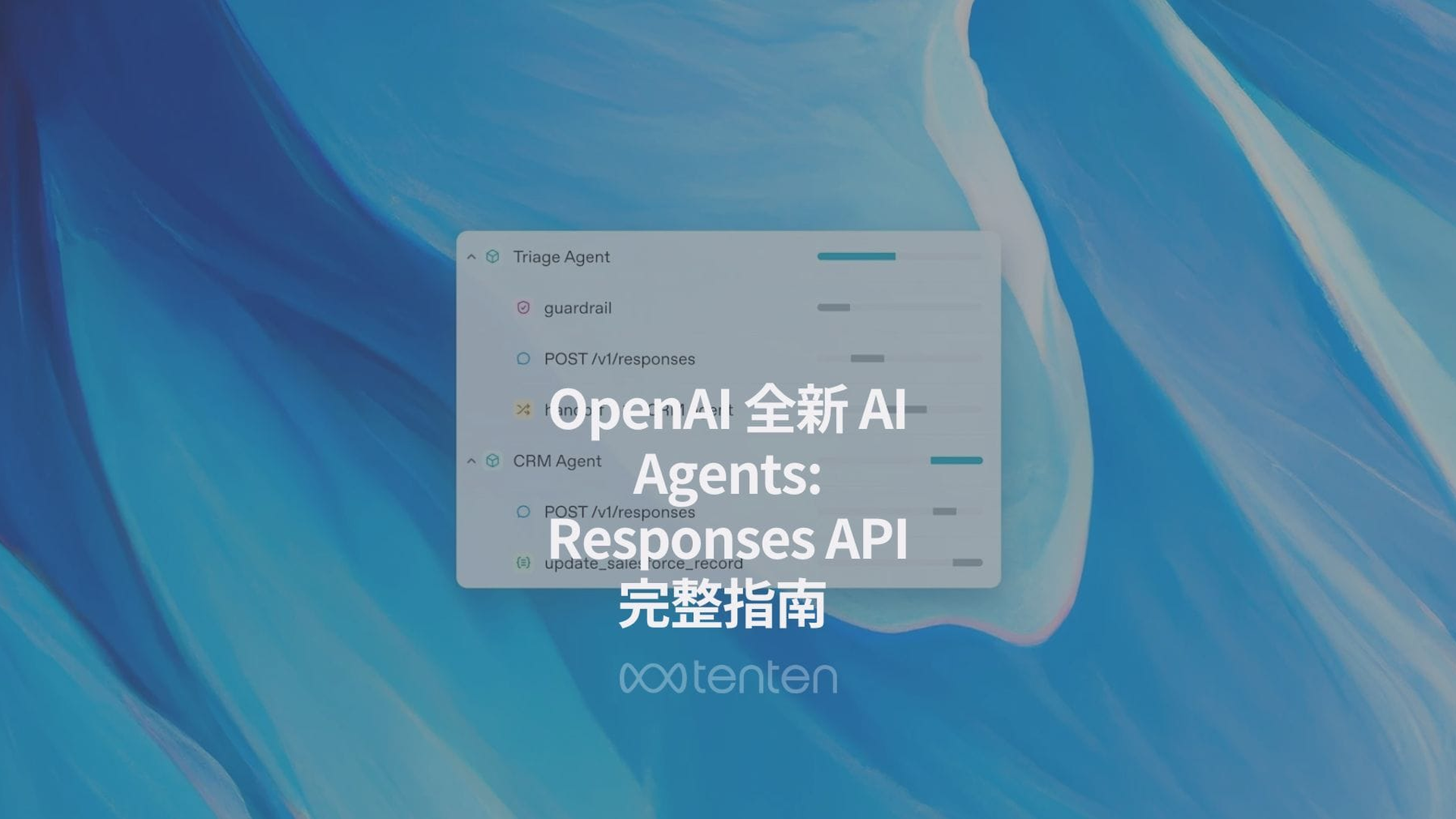
OpenAI has officially launched the public beta of its Agents API on September 10, exposing the managed Codex harness to developers. For years, developers have struggled with the "fragility" of AI agents—where a single hallucination in a tool call can crash an entire multi-step workflow. The new API solves this by handling the complex "plumbing" of agents internally. It manages session persistence, orchestration of multi-step tasks, context compaction (to prevent token overflow), and automated recovery when a tool fails.
Developers no longer need to build their own state machines; they simply supply the tools and select the execution environment. Key features include secure sandbox execution for code, native file editing capabilities, and integrated MCP (Model Context Protocol) connections for multi-agent delegation. This allows a "manager" agent to delegate sub-tasks to "specialist" agents without the developer manually passing state between them.
Anthropic Uncovers Bio-Weapon Plots and State Espionage
Anthropic's September threat intelligence report is a stark reminder of the dual-use nature of frontier models. The report details the successful disruption of biological-weapons research plots, where AI was being used to optimize the synthesis of dangerous pathogens. Beyond biological risks, Anthropic identifies a Russian state group, tagged GTG-20006, which has been conducting sophisticated AI-assisted espionage against Ukrainian and European government targets.
One of the more surprising findings involves "transfer stations." Anthropic discovered that Chinese AI firms, including Moonshot and DeepSeek, have been routing user queries to Claude through these clandestine proxy servers located outside China. This allows them to leverage Claude's reasoning capabilities while bypassing regional API restrictions and masking the origin of the traffic. The report also warns that "sophistication" is no longer a reliable signal of who is behind an operation, as low-resource actors can now use AI to mimic the tradecraft of state-level APTs.
Positron Raises $875M for Memory-First Inference Chips
The "memory wall" has long been the primary bottleneck for LLM inference. Traditional GPUs rely on High Bandwidth Memory (HBM), which is expensive, power-hungry, and limited in capacity. Hardware startup Positron is attempting to break this cycle. The company recently closed a massive $875M Series C at a $5B valuation to develop the "Asimov" chip.
The Asimov architecture is revolutionary because it completely skips HBM in favor of LPDDR5X, which allows for significantly higher density. Positron claims the chip can support up to 2,304GB of memory per die. This architectural shift is designed to serve 16T-parameter models with 10M-token context windows on a single chip or small cluster, effectively eliminating the need for the massive, power-intensive GPU clusters currently required for frontier inference. Taping is expected by the end of 2026, with production slated for H2 2027.
California Establishes First-in-Nation AI Auditor Registry
In a move that brings the "wild west" of AI safety closer to a regulated industry, Governor Gavin Newsom signed SB 813 and AB 1405 on September 9. These bills create the first formal state registry for independent AI auditors. For too long, the industry has relied on "self-grading," where AI labs publish their own safety reports with little external verification.
California's new laws set rigorous standards for third-party safety evaluations, ensuring that auditors are independent, transparent, and accountable to the state. This framework allows "independent verification organizations" to assess frontier models for legal compliance and catastrophic risk. Interestingly, both OpenAI and Anthropic publicly backed these bills, suggesting that the leading labs prefer a standardized regulatory environment over a fragmented patch-work of local laws.
OpenAI Astra Demand Triggers Pro Signup Freeze
The release of GPT-6 Astra has sent shockwaves through the consumer market, but not without technical growing pains. Demand for the model's advanced reasoning and computer-use capabilities has reached "unprecedented" levels. Consequently, OpenAI has been forced to temporarily freeze new signups for the $200/month ChatGPT Pro tier to prevent system collapse.
While API access remains open for developers, the consumer-facing "Pro" tier is currently capped. Simultaneously, OpenAI is pivoting toward the enterprise sector with "ChatGPT for Financial Services." Developed with Morgan Stanley and Evercore, this product integrates directly with LSEG, Daloopa, and PitchBook data feeds. It allows investment bankers to pull earnings-call transcripts, verify financial figures against original SEC filings, and generate bank-template PowerPoint decks autonomously.
Cognition Ships SWE-2 Coding Agent
The battle for the "autonomous engineer" has a new contender. Cognition has released SWE-2, a coding agent built on Moonshot's 2.8-trillion-parameter Kimi K3. On the FrontierCode 1.1 benchmark, SWE-2 scores 50%, putting it within striking distance of Anthropic's Fable 5.1 (50.9%). However, the real win is efficiency: SWE-2 operates at 64% lower cost than its competitors.
Cognition attributes this to a novel "Pareto-frontier RL" method that trains multiple effort levels (medium, high, max) in a single run. This allows the agent to dynamically adjust its "thinking" time based on the complexity of the bug. Users report a dramatic improvement in autonomy, with a median of 18 steps to the first real edit, compared to 48 steps for the previous SWE-1.7 version.
Apple's Reference Image Proves Photo Authenticity
As AI-generated imagery becomes indistinguishable from reality, Apple is introducing a hardware-level solution. Launching September 18 on the iPhone 18 Pro, the "Reference Image" feature captures cryptographically signed sensor data at the exact moment the shutter is pressed. This data is then processed via Private Cloud Compute to create an unalterable "digital negative."
When a user views a photo, they can toggle the Reference Image to see if the final output matches the original sensor data. Any AI-driven modification—from generative fill to complex filters—will be immediately detectable. While the feature is unavailable in China and the EU due to regulatory hurdles, it represents the first major attempt by a consumer electronics giant to embed "provenance" directly into the image capture pipeline.
NASA and IBM Open-Source Lunar Foundation Model
In a victory for open science, NASA and IBM have released the NASA-IBM Lunar Foundation Model as open weights on Hugging Face. The model was trained on an immense dataset of ~2M image tiles, including 1M+ 1-meter images from the Lunar Reconnaissance Orbiter.
The model's primary achievement is a 23% improvement over existing methods in identifying craters and volcanic irregular mare patches. More importantly, it excels at detecting ice deposits in permanently shadowed regions (PSRs), which are critical for future lunar colonies. The full training corpus, SomBench, and the associated code are available on GitHub, allowing researchers worldwide to refine lunar mapping.
Industry Outlook: The Year of the Agent
The patterns emerging today suggest that 2026 is the year AI transitions from a "knowledge tool" to an "action tool." The release of the Agents API, the rise of memory-first silicon like Positron's Asimov, and the deployment of autonomous coding agents like SWE-2 all point toward a future where AI manages the "how" of a task, not just the "what."
However, this autonomy comes with significant risks. As seen in the Anthropic report, the same tools that enable productivity also enable state-level espionage and bio-weapon research. The California auditor laws are a necessary first step, but they may not be enough to keep pace with the acceleration of agentic capabilities. We are entering an era where the primary bottleneck is no longer the intelligence of the model, but the security of the environment it operates in.
Frequently Asked Questions
What is the OpenAI Agents API and how is it different from the Chat Completions API?
The Chat Completions API is essentially a "stateless" interface; you send a prompt and get a response. The Agents API, however, provides a managed "harness" (the Codex harness) that handles state. It manages memory, session recovery, and the orchestration of tools across multiple turns, meaning the developer doesn't have to manually track what the agent did in the previous five steps.
Why is Positron's Asimov chip considered a "memory-first" architecture?
Traditional AI chips (like Nvidia's H100) use HBM (High Bandwidth Memory), which is incredibly fast but limited in size. Positron's Asimov chip uses LPDDR5X, which is slower than HBM but allows for massive capacity (up to 2TB per die). This allows a single chip to hold the weights of a 16-trillion parameter model and a massive context window, avoiding the "memory wall" that forces most models to be split across dozens of GPUs.
What does the California AI Auditor Registry actually do?
It creates a state-sanctioned list of "Independent Verification Organizations." Instead of AI labs simply saying "our model is safe" in a self-published report, they must hire these accredited auditors to verify those claims. The state then oversees the independence and integrity of these auditors, ensuring that safety evaluations are not just marketing exercises.
How does Apple's Reference Image detect AI edits?
It creates a cryptographic link between the raw sensor data and the final image. If an AI tool changes a pixel—for example, adding a person to a background—the mathematical signature of the image changes. By comparing the final image to the original "digital negative" stored in the cloud, Apple can prove with mathematical certainty that the image was modified.
What is the "transfer station" mentioned in the Anthropic report?
A transfer station is essentially a sophisticated proxy server. To bypass API bans or regional blocks (such as those in China), certain companies route their users' prompts through these servers in a neutral country. To the AI provider (like Anthropic), it looks like the traffic is coming from a legitimate business in the US or Europe, while the actual user is in a restricted region.
Why is Cognition's SWE-2 more efficient than previous coding models?
SWE-2 uses a "Pareto-frontier RL" training method. Instead of training the model to always use maximum effort (which is slow and expensive), it trains the model to recognize when a task is simple versus complex. It can then switch between "medium" and "max" effort levels, reducing the number of steps required to solve a bug and lowering the compute cost by 64%.
How does the NASA-IBM Lunar model help with future moon bases?
The model is specifically tuned to identify "permanently shadowed regions" (PSRs). These are areas of the moon that never see sunlight and are therefore extremely cold, making them the most likely places to find water ice. By mapping these regions with 23% higher accuracy, NASA can better plan where to land humans to secure water and fuel.
Sources
- AI Weekly (aiweekly.co)
- Anthropic Threat Intelligence Report (anthropic.com)
- Reuters (reuters.com)
- Bloomberg (bloomberg.com)
- Hugging Face (huggingface.co)
- Apple Newsroom (apple.com)
- Cognition AI (cognition.ai)
- NASA Open Science (nasa.gov)