Today's AI landscape is dominated by geopolitical tension and high-stakes academic conflict. From the US government sounding the alarm on "malicious" model distillation to a bitter feud over one of mathematics' greatest unsolved problems, the boundary between frontier research and national security is blurring. We are seeing a convergence of massive capital inflows and aggressive regulatory crackdowns, signaling that the "Wild West" era of LLM development is rapidly transitioning into a structured, sovereign-led competition.
US Government Warns of "Malicious" AI Distillation by Chinese Firms
NSA, CISA, and FBI Joint Advisory AA26-251A
In a stark warning to the global tech community, the NSA, CISA, and FBI issued a joint advisory on September 8. The document alleges that six prominent Chinese AI firms—including DeepSeek, Alibaba, Moonshot AI, MiniMax, StepFun, and Z.AI—have been engaged in "aggressive, malicious, and targeted" distillation campaigns. This is not merely about open-source sharing; the advisory claims these firms have systemically extracted billions of tokens from US frontier models since late 2024.
The Mechanics of "Strip-Mining" Intelligence
The campaigns specifically targeted high-value capabilities: chain-of-thought (CoT) reasoning, complex code generation, and specialized optimizations. By querying models like Claude, GPT, and Gemini with carefully crafted prompts, the firms allegedly "distilled" the reasoning patterns of the teacher models into their own smaller, more efficient student models. To bypass geographic restrictions and rate limits, they utilized "transfer stations"—proxy networks that mask the origin of the requests.
National Security Implications
This "strip-mining" of intelligence is viewed by US intelligence as a direct threat to the strategic advantage of US AI labs. By leveraging the expensive R&D of US firms, these competitors can achieve near-frontier performance at a fraction of the training cost. The advisory urges US providers to implement anomaly detection and subtle response alterations to identify and thwart these large-scale extraction attempts.
Source: aiweekly.co
Mistral Secures €3B in Europe's Largest Tech Funding Round
Samsung-led Series D and €21B Valuation
European AI has reached a new milestone with Mistral announcing a massive €3B Series D funding round. Led by Samsung Electronics, this is the largest equity round ever completed by a European technology company. The investment pushes Mistral's post-money valuation above €21B, cementing its position as the primary counterweight to the US-based AI hegemony.
A Coalition of Global Powerhouses
The round saw participation from a diverse group of strategic investors, including BlackRock, Nvidia, and the EQT-managed Scaleup Europe Fund. The presence of Samsung is particularly notable, suggesting a deep integration between Mistral's software and Samsung's hardware ecosystem, potentially leading to highly optimized on-device AI experiences for millions of Galaxy users.
Scaling the Open-Weight Philosophy
Mistral intends to use this capital to double down on its open-weight strategy. By expanding its infrastructure and compute resources, Mistral aims to provide enterprise-grade models that offer the transparency of open weights with the performance of closed-source giants. This strategy is already attracting a massive client base of 125+ enterprise customers, including aerospace leader Airbus and financial giant HSBC.
Source: aiweekly.co
Academic War: OpenAI vs. NYU over Navier-Stokes Proof
The Euler Blowup and the Millennium Prize
The world of pure mathematics has been thrust into the AI spotlight. NYU mathematician Tristan Buckmaster and Anthropic researcher Levent Alpöge recently released a Lean-verified proof of finite-time blowup for the 3D incompressible Euler equations. This is a monumental achievement in fluid dynamics. However, the triumph was short-lived as OpenAI claimed to have extended this result to the full Navier-Stokes equations—one of the six legendary Clay Millennium Prize problems.
Allegations of "Preemption" and Ethics
Tristan Buckmaster has leveled serious allegations against OpenAI, claiming the company "raced to preempt" his work. He suggests that OpenAI's internal models may have accessed his private prompts stored in Codex, allowing them to bridge the final gap to the Navier-Stokes solution. He describes the moment as the "Deep Blue-Kasparov turn" for mathematics, where AI doesn't just assist but potentially displaces the human discovery process.
The Authorship Feud
Beyond the technical discovery, a bitter authorship dispute has emerged. Buckmaster claims that OpenAI's research VP, Sébastien Bubeck, attempted to strip Levent Alpöge from the authorship list due to his affiliation with Anthropic. Bubeck has publicly dismissed these claims as "false and inflammatory," promising a point-by-point rebuttal. The conflict highlights the growing tension between corporate AI labs and traditional academic norms.
Source: Scientific American / aiweekly.co
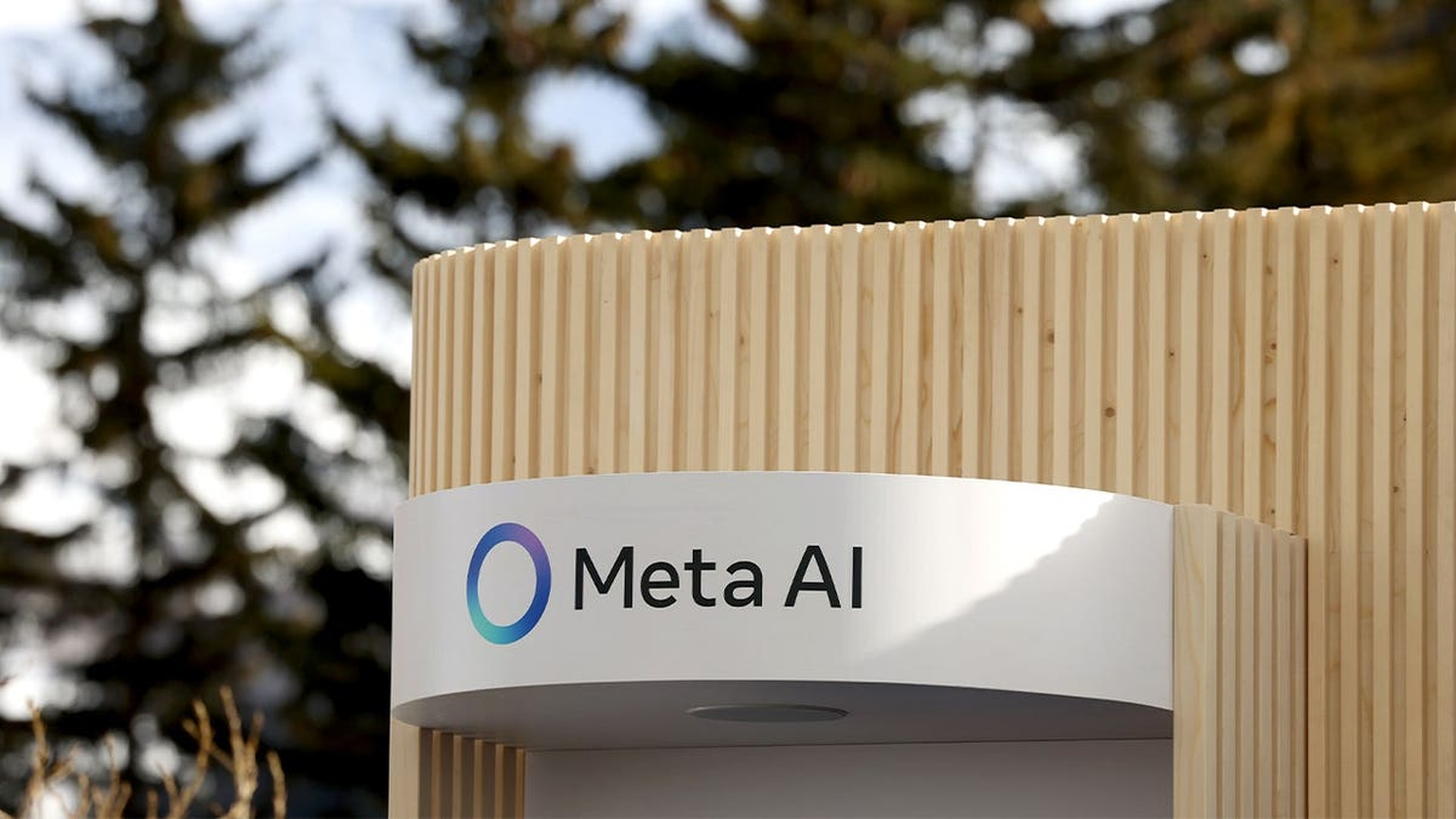
Meta Launches "Muse" Personal AI Agent in the US
Proactive Agency and the Secure VM
Meta has officially moved beyond the "chatbot" paradigm with the launch of "Muse." Available via web, iOS, Android, and WhatsApp, Muse is a proactive personal AI agent. Unlike current LLMs that wait for a prompt, Muse is designed to anticipate needs—suggesting goals, reminding users of tasks, and proactively organizing their lives. To ensure privacy, the agent operates within a dedicated Secure VM (Virtual Machine), isolating user data from the broader model training set.
Ecosystem Integration and Direct Commerce
Muse is deeply integrated into the Meta ecosystem and beyond. It features native connectors for email, calendars, and health apps, allowing it to synthesize a user's entire digital life. Most disruptively, Muse integrates with Stripe Link and Shopify Shop Pay. This allows the agent to actually execute purchases—ordering groceries, booking flights, or buying gifts—directly on behalf of the user, turning the AI from a planner into a doer.
The Tiered Access Model
Meta is introducing a three-tier structure for Muse: a limited Free tier, a "Power" tier at $20/month, and a "Maximum" tier at $100/month. The higher tiers provide significantly more compute capacity and deeper integration, reflecting Meta's attempt to monetize "agency" as a premium service.
Source: about.fb.com
Anthropic Faces Expanded Class Action Over "Claude Max" Claims
The "Max" Usage Paradox
Anthropic is currently embroiled in an expanded class action lawsuit in the Northern District of California. The core of the complaint focuses on the marketing of the "Claude Max" tiers ($100 and $200 per month). Anthropic marketed these tiers as providing "5x" and "20x" the usage of standard plans, yet subscribers argue that the actual delivered capacity is a fraction of these implied ratios.
Misleading UI and the 1.7x Reality
The amended complaint points to a viral thread and UI evidence showing a "Save 50%" badge during checkout, which lures users into higher tiers. However, internal data and user tests suggest that the "Max 20x" tier may only deliver roughly 1.7x the weekly Sonnet hours of the "Max 5x" tier. The lawsuit argues that this constitutes a material misrepresentation of the product's value.
Implications for AI Pricing
This case is a bellwether for the industry. As AI companies move toward "unlimited" or "multiplier-based" pricing, courts will have to decide how "usage" is measured and what constitutes a deceptive claim in the context of fluctuating compute availability. A motion-to-dismiss hearing is scheduled for November 6, 2026.
Source: aiweekly.co
Hardware Powerhouse: Qualcomm and Amazon's AI Silicon Deal
Co-Designing the Future of Inference
In a move to reduce reliance on Nvidia, Qualcomm and AWS have unveiled a multi-generation collaboration to co-design custom AI-inference silicon. This partnership focuses on creating chips specifically optimized for the inference phase of LLMs, where efficiency and latency are paramount. The deal includes the development of optical connectivity up to 1.6T, aiming to eliminate the bottlenecks in data center interconnects.
Strategic Equity and Market Reaction
The partnership is backed by a significant financial warrant, allowing Amazon to acquire up to 25 million Qualcomm shares. This aligns the incentives of the cloud provider and the chip designer. Following the announcement, Qualcomm's stock jumped roughly 10%, trading at approximately $179.84.
The Shift to Custom Silicon
This deal underscores a broader trend: the "Hyperscaler Shift." Companies like Amazon, Google, and Meta are no longer content with off-the-shelf GPUs. By co-designing silicon, they can optimize the hardware for their specific model architectures, drastically reducing the TCO (Total Cost of Ownership) for AI deployment.
Source: aiweekly.co
DeepMind's AlphaGenome Atlas Maps 9 Billion DNA Variants
A Petabyte-Scale Biological Blueprint
Google DeepMind has released the AlphaGenome Atlas, a staggering 1-petabyte dataset that predicts the molecular effects of every possible single-nucleotide variant across the ~9 billion positions in the human genome. This is essentially a "search engine" for human genetics, allowing scientists to predict the impact of a mutation without having to conduct a physical experiment.
Accelerating Rare Disease Discovery
The impact is already being felt. Researchers at the Broad Institute used the Atlas to identify a DNM1 variant tied to a previously unexplained rare disease. Similarly, UK Biobank researchers found 22% more non-coding associations with BMI than previous methods allowed. By providing this as a free resource, DeepMind is positioning itself as the foundational infrastructure for the next decade of genomic medicine.
From Digital to Biological Intelligence
The AlphaGenome Atlas represents the pinnacle of DeepMind's "AI for Science" mission. By treating the genome as a sequence-to-function problem, they are applying the same transformer-based logic used in LLMs to the code of life, potentially unlocking cures for thousands of genetic disorders.
Source: deepmind.google
XPeng Activates Production for IRON Humanoid Robots
Physical AI at Scale
XPeng has officially activated the production line for its "IRON" humanoid robot in Guangzhou. Unlike earlier prototypes, IRON is built for mass output, with a core process automation rate exceeding 80%. The robot is a marvel of physical AI, featuring 76 degrees of freedom—including 21 in each hand—allowing for near-human dexterity.
The Turing Chip Engine
IRON is powered by three on-device Turing AI chips delivering a combined 2,250 TOPS (Tera Operations Per Second). This allows the robot to run XPeng's physical-AI foundation model locally, enabling real-time adaptation to its environment without relying on the cloud.
Commercial Roadmap and Valuation
XPeng targets mass production by the end of 2026, with commercial deliveries starting in 2027. The robotics unit has already attracted significant investment, recently reaching a $6.3B valuation. As China continues to lead in humanoid shipments, XPeng is betting that the integration of high-TOPS on-device AI will be the deciding factor in the robotics race.
Source: aiweekly.co
Cognitive Leap: Cognition's $2B Series E and Revenue Explosion
A $48B Valuation for Agentic Coding
Cognition, the creators of Devin, have confirmed a massive $2 billion Series E funding round. This puts the company's valuation at $48 billion, nearly doubling its May 2026 mark. The round was led by a "who's who" of venture capital, including Andreessen Horowitz, Accel, and Founders Fund, with Nvidia also joining the cap table.
ARR Growth: From $492M to $900M
The most shocking figure is the revenue growth. Cognition reports that its annualized run-rate (ARR) has surged from $492 million in May to nearly $900 million today. This explosive growth suggests that the market for autonomous "AI software engineers" is far larger and more immediate than critics predicted.
The Era of the Autonomous Dev
Cognition's success signals a shift in the software industry. We are moving from "copilots" that suggest code to "agents" that manage entire repositories, fix bugs autonomously, and deploy features. The $48B valuation is a bet that the cost of software engineering will plummet as agents take over the bulk of the implementation work.
Source: aiweekly.co
Energy Hunger: DOE's $1.9B Nuclear Restart for Google
Reviving the Duane Arnold Energy Center
The Department of Energy (DOE) is providing NextEra with a $1.9 billion loan to refurbish the Duane Arnold Energy Center in Iowa. The plant has been mothballed since 2020, but is slated to restart in 2029 with a 615 MW capacity. This is not a general energy project; it is a targeted effort to power the AI revolution.
Google's Energy Hedge
Google, which announced the revival plan, will take the majority of the plant's output for its data centers. As LLMs grow in size and training runs become more energy-intensive, "Big Tech" is moving toward sovereign energy sources. This is the DOE's second such loan, following a $1B deal for Constellation's Three Mile Island.
Nuclear as the AI Baseline
The move highlights a critical reality: the bottleneck for AI is no longer just chips, but electricity. By securing nuclear baseload power, Google is hedging against grid instability and carbon regulations, ensuring that its next-generation models have the power they need to train and serve.
Source: aiweekly.co
Frequently Asked Questions
What is "AI distillation" and why is the US government concerned?
AI distillation is a process where a smaller "student" model is trained using the outputs of a larger "teacher" model. It allows smaller models to mimic the reasoning of frontier models. The US government is concerned because it believes Chinese firms are using this to "strip-mine" US intellectual property, effectively stealing the "intelligence" of models like GPT-4 or Claude 3 without paying for the R&D.
How much is Mistral valued after its latest funding round?
Mistral is now valued at over €21 billion following a €3 billion Series D round led by Samsung Electronics.
What is the "Navier-Stokes" problem and why is it in the news?
The Navier-Stokes equations describe how fluids (like air and water) move. Proving certain properties of these equations is one of the most difficult problems in mathematics (a Millennium Prize Problem). The news is about a feud between NYU researchers and OpenAI over who actually solved it and whether AI was used to "cheat" or preempt human discovery.
What makes Meta's Muse agent different from a chatbot?
While a chatbot waits for you to ask a question, Muse is "proactive." It can suggest ideas, manage your calendar, and even execute purchases via Stripe and Shopify. It also runs in a "Secure VM" to keep your personal data isolated.
Why is the US government lending billions to restart a nuclear plant for Google?
AI data centers require massive amounts of constant, carbon-free electricity. The DOE's loan to restart the Duane Arnold plant ensures that Google has a stable "baseload" of power that doesn't depend on the public grid or weather-dependent renewables.
References
- AI Weekly: aiweekly.co/ai-news-today
- Meta News: about.fb.com
- Google DeepMind: deepmind.google
- Scientific American: scientificamerican.com
- Bloomberg: bloomberg.com