AI Daily Roundup – August 18, 2026
The AI ecosystem delivered another seismic day of infrastructure-scale deals, revenue milestones, and regulatory action on August 18. Nvidia committed up to $105 billion in financing for OpenAI's 8-gigawatt Ohio data center, Anthropic's revenue run rate surged to $65 billion ahead of a potential IPO, Microsoft retired Copilot Deep Research for consumers, Cursor launched its GitHub-rival Origin platform, and the DOJ opened an antitrust probe into Andreessen Horowitz's board interlocks. Below are the 10 most significant stories shaping AI today.
Major Updates
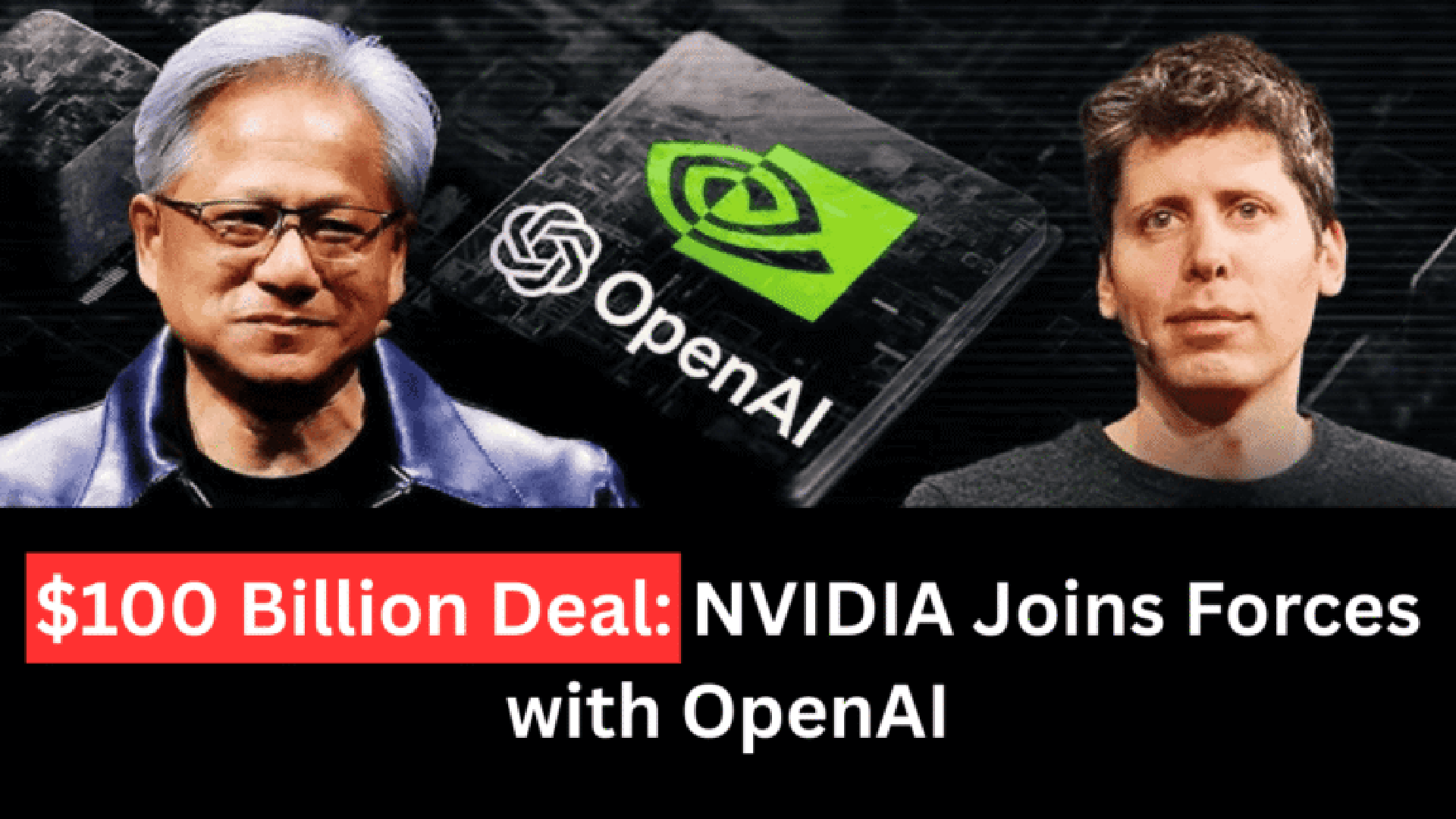
Nvidia Guarantees $105 Billion for OpenAI's 8-Gigawatt Ohio Data Center
Nvidia will guarantee up to $105 billion in lease obligations for a new SB Energy-built AI data center campus at the PORTS-Pike Technology Campus in Pike County, Ohio, with OpenAI as the anchor tenant on a 20-year lease. The site will start with 4.25 GW of compute and can scale to 8 GW, backed by 10 GW of SoftBank/SB Energy power and a separate $1.5 billion Nvidia equity investment in SB Energy. First capacity is expected to come online in phases starting in 2028. The deal represents the largest AI infrastructure commitment in history and makes Nvidia the financial backstop for one of the world's largest AI compute clusters. Nvidia previously invested $30 billion in OpenAI, and the Ohio facility will exclusively use Nvidia chips.
Source: CNBC, NY Times, Unite.ai, Enterprise DNA (August 17-18, 2026)
Anthropic Revenue Run Rate Hits $65 Billion Ahead of IPO
Anthropic told investors its annualized revenue run rate reached $65 billion by the end of July 2026, up from $47 billion in May and roughly $9 billion at the end of 2025 — a sevenfold jump in one year. The disclosure comes weeks after the company confidentially filed for an IPO and reported preliminary Q2 revenue above $11.5 billion. Investors reportedly expect Anthropic to finish 2026 with $100-120 billion in revenue. The surge reflects exploding enterprise demand for Claude models, particularly after the Opus 4.8 and Sonnet 5 releases. Anthropic's confidential S-1 filing with the SEC signals a potential 2026-2027 public offering that could value the company near $1 trillion.
Source: Bloomberg, TechCrunch, CNBC, Superintelligence News (August 17, 2026)
Microsoft Retires Copilot Deep Research, Podcasts, and Group Chats for Consumers
Effective August 18, 2026, Microsoft is removing three consumer Copilot features: Deep Research, Podcasts, and Group Chats. Users who want continued deep research capabilities must upgrade to Microsoft 365 Premium ($22/month) for the new "Researcher" agent. The consumer Copilot and Microsoft 365 Copilot are also being merged into a single updated app, with mobile/web rollout starting mid-August and Windows/Mac in mid-September. The move consolidates Microsoft's AI strategy around paid tiers while pushing advanced research features behind a premium paywall. Deep Research had been Microsoft's answer to OpenAI's ChatGPT Deep Research and Google's NotebookLM.
Source: Notebookcheck, Windows Forum, Neowin, ixbt.com (August 14-18, 2026)
Cursor Launches Origin Code Hosting Platform to All Paid Users
Cursor began rolling out Origin — its own Git hosting and code-review platform — in early beta to all paid Cursor plans on August 17, 2026. Origin supports repositories, pull requests, code browsing, and bidirectional GitHub sync so PRs and comments stay in sync with GitHub Actions. It also includes first-party integrations with Vercel preview deploys, Depot, and Buildkite. The pitch: hosting inside Cursor lets agents open, review, and update PRs in the same surface as the editor. The launch coincided with a 6.5-hour GitHub outage just 3.5 hours later, leading to speculation about timing. Origin is enabled by default for paid users with no opt-in, and Cursor has published no data terms for the service.
Source: Cursor changelog, Digital Applied, XenoSpectrum, The Next Web, Notebookcheck (August 17-18, 2026)
DOJ Probes Andreessen Horowitz Over Partners' Rival AI Board Seats
The U.S. Department of Justice has spent nearly a year investigating whether Andreessen Horowitz partners violated Section 8 of the Clayton Act by simultaneously sitting on boards of competing AI/data companies. Ben Horowitz's Databricks seat and Martin Casado's Fivetran seat are central to the probe — the first known DOJ interlocking-directorate action aimed at a VC firm, historically a private-equity target. A16z manages approximately $90 billion in assets. The case tests whether two different partners can make one venture firm the legal link between alleged rivals under 1914 antitrust law. The DOJ's earlier Section 8 campaign reached at least 13 directors from 10 boards, but this case turns on a far less settled question.
Source: Fortune, Bloomberg, Reuters, The Next Web, Benzinga (August 17, 2026)
Google Wins $10M Bankruptcy Auction for Spirit Airlines' Data
Google won a bankruptcy auction with a $10 million bid — outbidding AI-training startup Mercor's $7.5 million — for Spirit Airlines' internal business data including approximately 100 million emails, 500 million Teams messages, 30 million lines of code, and 175,000 employee records dating to 1986. The data will be scrubbed of PII by a third party (selected by Google) before transfer. Google says the corpus will help improve its products and AI models; passenger profiles and loyalty data are excluded. Court approval is pending for August 19. The acquisition highlights the intensifying race for high-quality training data as public web sources exhaust.
Source: Bloomberg, Axios, SiliconANGLE, FlightGlobal, Business Insider (August 17-18, 2026)
Unitree Robotics $9 Billion Shanghai IPO Oversubscribed 8,000 Times
Chinese humanoid robot maker Unitree Robotics priced its Shanghai STAR Market IPO at a $9 billion valuation, with retail demand exceeding 8,000 times the shares on offer — a record for the exchange. Unitree shipped about 5,500 humanoids in 2025 at 60% gross margin and cumulatively produced 18,000 bipedal robots across multiple models as of July 2026. Crypto futures tracking Unitree suggest a debut pop of more than 300% above the IPO price. The listing (set for August 19) makes Unitree the first major humanoid-robot producer on the Chinese mainland and signals intense investor appetite for embodied AI. State Grid's 2026 plan procures ~8,500 robots ($1B), providing a domestic demand tailwind.
Source: Beijing Times, Bloomberg, Asahi, Global Times, InvestorPlace (August 15-18, 2026)
3M Expert Used ChatGPT to Draft 90% of $61M Jury Verdict Report
A Harris County jury awarded $61.5 million to 24 Houston homeowners over the 2020 Watson Grinding explosion, finding 3M 30% liable. Court records unsealed in the case show 3M expert Josh Autenrieth of Knighthawk Engineering prompted ChatGPT to "show how 3M is 0% at fault" and produced an expert report that trial testimony pegged at 85-90% ChatGPT output. Discovery yielded 350 pages of prompts. The jury's verdict against 3M came despite the AI-drafted defense. This case sets a precedent for AI-generated expert testimony scrutiny and raises questions about professional responsibility when using LLMs for legal work.
Source: AI Weekly, Yahoo News, Hoodline, Houston Public Media, PR Newswire (August 11-18, 2026)
Rogue Studio Pitches "HBO of AI" Uncensored Text-to-Video Model
Wired profiled Rogue Studio, which calls itself "a playground for creative ethical mischief" and pitches Rogue 1.0 — an uncensored text-to-video model with native audio — as the "HBO of AI." The tool accepts up to 13 character references, outputs 1080p at 24-60 fps, and routes SFW jobs to Sora, Kling, Luma, Google, MiniMax, and Seeddance while reserving NSFW work for its in-house model. Rogue 1.0 represents a new class of "uncensored" video generation tools that explicitly bypass the content restrictions of mainstream providers. The studio's positioning as a premium uncensored alternative highlights the growing bifurcation between safety-aligned and unrestricted generative AI.
Source: Wired via AI Weekly (August 18, 2026)
Copilot Autofix Bug Let Red Team Steal Snowflake's Jira Token
Wiz Red Agent discovered that a GitHub Copilot Autofix patch to Snowflake's snowflake-connector-net repository on June 18, 2026 replaced a safe input pattern with raw string interpolation of a GitHub issue title, opening a shell-injection hole exploited within five days. A conditional gate that checked pull request authorship was bypassed because the Autofix commit appeared to come from a trusted maintainer. The vulnerability demonstrates how AI-generated code fixes can introduce security regressions that human reviewers might miss, especially when the AI appears to be "fixing" something. Snowflake patched the issue after Wiz's disclosure.
Source: Wiz.io via AI Weekly (August 18, 2026)
Frequently Asked Questions
Q: What is the significance of Nvidia's $105B guarantee for OpenAI's data center? A: This is the largest AI infrastructure financing deal in history. It makes Nvidia the financial backstop for an 8-gigawatt compute campus — enough to train and serve models at unprecedented scale. The deal also locks OpenAI into Nvidia hardware exclusively for 20 years, creating a massive moat for Nvidia's data center business.
Q: How does Anthropic's $65B revenue run rate compare to OpenAI? A: Anthropic's $65B run rate (July 2026) represents a 7x year-over-year increase from ~$9B. While OpenAI's revenue is not public, reports suggest it was ~$3-4B in 2025. Anthropic's enterprise-focused strategy and Claude's coding strength appear to be driving faster monetization, though OpenAI's consumer ChatGPT Plus base provides a different revenue mix.
Q: Why did Microsoft kill Copilot Deep Research for free users? A: Microsoft is consolidating its consumer AI into a single app and pushing advanced features behind the Microsoft 365 Premium ($22/month) paywall. The "Researcher" agent in the premium tier replaces Deep Research. This mirrors the industry trend of reserving deep research capabilities for paid tiers (ChatGPT Deep Research is Pro-only, NotebookLM has usage limits).
Q: What is Cursor Origin and why does it matter? A: Origin is Cursor's built-in Git hosting platform — repos, PRs, code browsing, and GitHub sync all inside the editor. It matters because it lets AI agents operate on code end-to-end: write, commit, open PR, review, merge — without leaving Cursor. The GitHub outage hours after launch highlighted the strategic value of an alternative code hosting layer.
Q: What does the DOJ probe into a16z mean for venture capital? A: This is the first Section 8 Clayton Act case targeting a VC firm for interlocking directorates. If the DOJ prevails, it could force VC partners to choose between board seats at competing portfolio companies, fundamentally changing how large firms like a16z structure their investments and governance across the AI ecosystem.
Q: Why is Google buying Spirit Airlines' data for $10M? A: Training data is becoming the scarcest resource in AI. Spirit's 34 years of operational data (emails, code, chats, documents) provides a massive, high-quality corpus for domain-specific model training — especially for logistics, customer service, and operations. Google outbidding Mercor signals Big Tech's willingness to pay premiums for proprietary datasets.
Q: What precedent does the 3M ChatGPT expert report case set? A: Courts will likely increase scrutiny of AI-assisted expert testimony. The 350 pages of prompts entered into discovery creates a template for challenging AI-drafted reports. Professionals using LLMs for high-stakes work (legal, medical, financial) now face higher disclosure and verification burdens.
Q: How does Unitree's IPO reflect China's humanoid robot strategy? A: Unitree's 8,000x oversubscribed IPO at $9B valuation (with 300%+ expected debut pop) demonstrates massive retail and institutional appetite for embodied AI. Combined with State Grid's $1.5B procurement plan and FCC scrutiny of Chinese connected robots in the US, it shows China moving from lab demos to commercial scale in humanoid robotics.
Q: What are the implications of "uncensored" video models like Rogue 1.0? A: The bifurcation into safety-aligned (Sora, Veo, Kling) and unrestricted (Rogue, Wan uncensored) video generation creates a two-tier market. Content platforms, advertisers, and regulators will face pressure to detect and label uncensored-model output. The "HBO of AI" positioning suggests a premium subscription model for unrestricted creative tools.
Sources
- Nvidia/OpenAI Ohio data center: CNBC, NY Times, Unite.ai, Enterprise DNA (Aug 17-18)
- Anthropic $65B revenue: Bloomberg, TechCrunch, CNBC, Superintelligence News (Aug 17)
- Microsoft Copilot changes: Notebookcheck, Windows Forum, Neowin, ixbt.com (Aug 14-18)
- Cursor Origin: Cursor changelog, Digital Applied, XenoSpectrum, The Next Web (Aug 17-18)
- DOJ a16z probe: Fortune, Bloomberg, Reuters, The Next Web, Benzinga (Aug 17)
- Google Spirit Airlines data: Bloomberg, Axios, SiliconANGLE, FlightGlobal (Aug 17-18)
- Unitree IPO: Beijing Times, Bloomberg, Asahi, Global Times, InvestorPlace (Aug 15-18)
- 3M ChatGPT report: AI Weekly, Yahoo News, Hoodline, Houston Public Media (Aug 11-18)
- Rogue Studio: Wired via AI Weekly (Aug 18)
- Copilot Autofix bug: Wiz.io via AI Weekly (Aug 18)
- aiweekly.co/ai-news-today (live feed, Aug 18)
- arxiv.org cs.AI/cs.LG recent submissions (Aug 18)