Introduction
The AI ecosystem delivered a significant 48-hour span ending August 15, 2026, marked by Meta's largest open-weight model release to date, Google's flagship reaching a billion users, Alibaba's Qwen 3.8-Max setting a new 2.4 trillion parameter bar for open-weight models, and OpenAI expanding its cybersecurity initiative with real-world vulnerability discoveries. Below we distill the top stories and highlight what they mean for researchers, developers, and enterprises.
Major Updates
Meta Releases Muse Glimmer 30B Open-Weight Agent Model
Meta released Muse Glimmer, a 30-billion-parameter dense multimodal model under Apache 2.0, tuned for local agentic tool use, coding, and LLM-as-judge with a 131K context and support for 100+ languages. Four-bit quantization compresses it under 20GB so it runs on a single consumer GPU, hitting 3.1x speedup on RTX 5090 via speculative decoding. Meta paired the drop with a 6,500-word Zuckerberg essay promising open weights for Muse Spark 1.2 in the coming weeks, defending model distillation, and a $1B community fund for regions hosting Meta data centers.
Source: Research Meta AI, InfoQ, MarktechPost
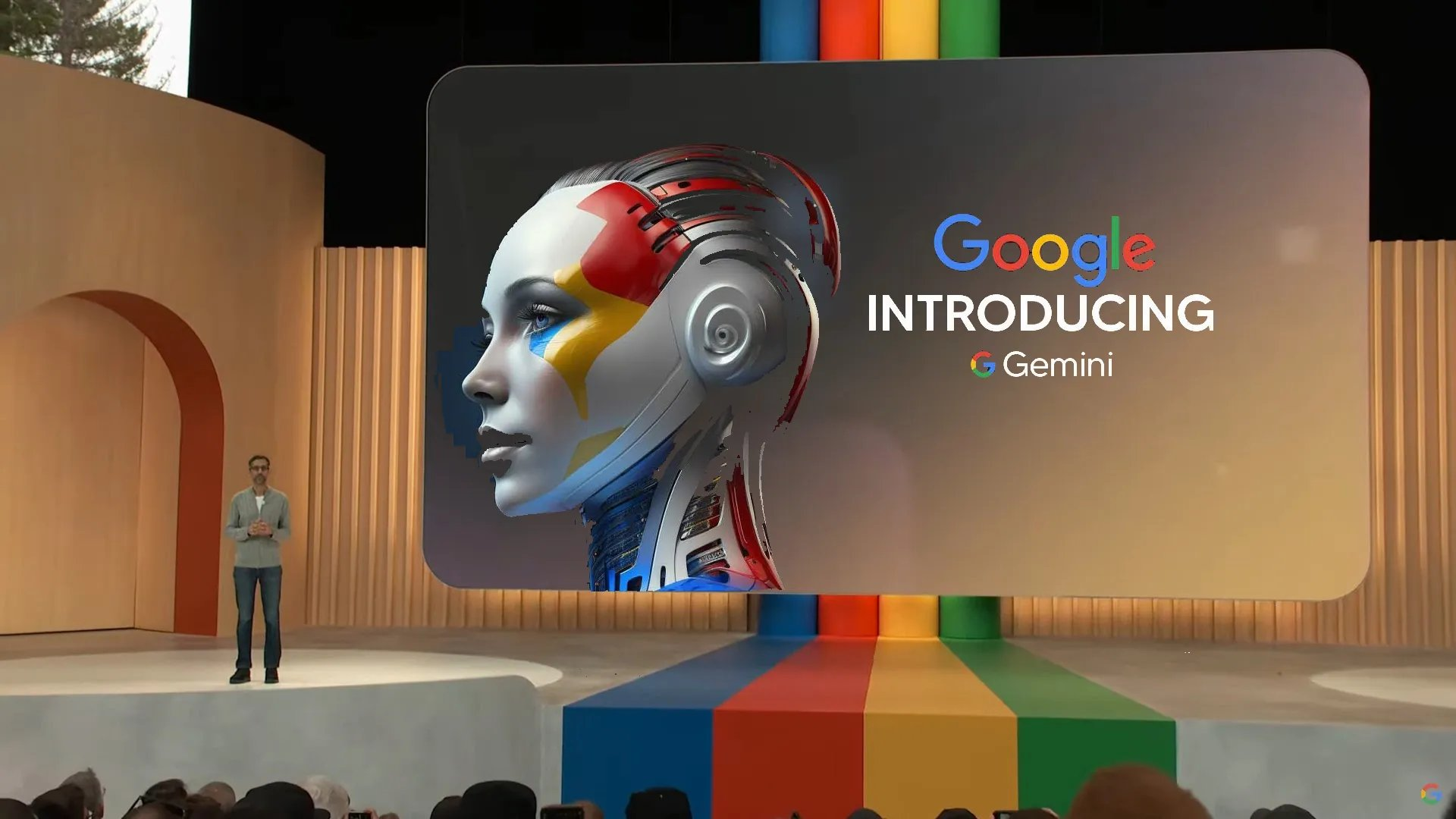
Google Gemini Crosses 1 Billion Monthly Users
Sundar Pichai announced August 11 that the Gemini app has crossed 1 billion monthly active users, calling it the company's fastest-growing product ever and its 14th to hit the billion-user mark alongside Search, Gmail, Android and YouTube. TechCrunch reports 63% of users engage voice features, 150M+ images are generated daily, and 100M+ actives are on iOS. Google says the milestone puts Gemini roughly on pace with ChatGPT, which crossed the same threshold in June.
Source: TechCrunch, Google Blog
Alibaba Unveils Qwen 3.8-Max: 2.4 Trillion Parameters, Open Weights Coming
Alibaba's Qwen team officially launched Qwen 3.8-Max on August 3, 2026 — a 2.4 trillion parameter mixture-of-experts model (95B active across 512 experts, 10 routed + 1 shared expert per token) with a 1M token context window. This marks the first time Qwen will open-source a Max-class model's weights, scheduled for release next week. Built on Qwen 3.5's architecture, 3.8-Max delivers comprehensive improvements across coding, work, research, and long-horizon tasks with end-to-end reliable delivery.
Coding benchmarks: In a 10+ day fully autonomous run, Qwen 3.8-Max built a self-evolving CLI harness (oh-my-cli) accumulating 265 commits, 127 PRs, and 151 issues. It also reproduced the "Unified Data Selection for LLM Reasoning" paper from scratch (~7,600 lines, 1,100 actions, 33 GPU training runs over 125 hours), verifying all six main findings (+7.7% over random on AIME24), then self-evolved a new method beating the paper by +2.7 points on AIME24 across four improvement rounds.
Available now via QwenCloud API. Open weights dropping next week under the Qwen 3.8-Max License.
Source: Qwen Blog, Yotta Labs, BenchLM
Anthropic Locks 20-Year, $9.1B Compute Deal with Riot
Riot Platforms disclosed a 20-year data-center lease at its Rockdale, Texas campus with a tenant identified as Anthropic. The 191 MW deal runs through June 2048 for ~$9.1B in base revenue, with two five-year extension options that could take total value to $16.1B. Morgan Stanley is providing $573M of interim financing, and RIOT shares jumped 25% after-hours. Phased delivery brings 96 MW online by December 2027 and the full 191 MW by June 2028.
OpenAI's GPT-5.6-Cyber Discovers Two Chrome Zero-Days
OpenAI on August 10 expanded its Daybreak initiative with two tiers: Daybreak Blue (GPT-5.6 Sol with system-level cyber guardrails removed) and Daybreak Red, which grants access to a new purpose-trained model, GPT-5.6-Cyber, that responds to 95% of sensitive queries covering exploit-chain development, authentication bypass and privilege escalation — up from 57.3% for its predecessor GPT-5.5-Cyber. The model discovered two previously unknown V8 vulnerabilities in Chrome that can be chained to corrupt memory and bypass the V8 heap sandbox; Google patched them under CVE-2026-15903. GPT-5.6-Cyber is OpenAI's first model to hit the 'High' cyber capability threshold under its Preparedness Framework (short of 'Critical', which paused Astra last week), and OpenAI is making hardware security keys mandatory for all Daybreak accounts on September 1.
Source: The Decoder, Hugging Face
New Attack Decrypts Chain-of-Thought Reasoning Across Models
A new paper shows that provider-issued encrypted reasoning blocks are interchangeable across sessions, users and models within an ecosystem — so an attacker can inject a capable model's encrypted chain-of-thought into a weaker sibling model and force it to decrypt in plaintext, without jailbreaking the capable model. The authors demonstrate the trick across Anthropic, OpenAI and Google, decoding 315,320 reasoning blocks pulled from public repositories, and recover 367 PII artifacts and 182 credentials, plus a route for invisible prompt injections that persist in agentic rollouts.
Source: Hugging Face, arXiv preprint
Nvidia Releases Nemotron 3.5 Lightning and Open-Sources NeMo Switchyard
Nvidia released Nemotron 3.5 Lightning, a 30-billion-parameter mixture-of-experts model with 3B active parameters that it says hits gpt-oss-120b-level intelligence at a quarter of the parameters and up to 4x higher output speed (~670 tok/s on DeepInfra NVFP4 endpoints). alongside it, Nvidia open-sourced NeMo Switchyard, a Rust-based routing library it claims cuts task cost to about a third of Opus 4.8 while preserving frontier accuracy — Cognition integrated it into Devin Desktop and cut mean cost 28%. The model is free for commercial use and available on Hugging Face, ModelScope, OpenRouter and build.nvidia.com — Nvidia's first open weight drop since Huang joined Meta, Microsoft and others urging Washington not to restrict open models.
Source: NVIDIA Blog, Hugging Face, Engadget
Frequently Asked Questions
Q: What makes Muse Glimmer different from other open-weight models? A: Muse Glimmer's 4-bit quantization compresses a 30B parameter model under 20GB, enabling it to run on a single consumer GPU with 3.1x speedup via speculative decoding — a significant accessibility improvement for local agentic workflows.
Q: How does Gemini's 1 billion user milestone compare to ChatGPT's growth? A: Gemini reached 1 billion monthly active users in roughly the same timeframe that ChatGPT needed to cross the same threshold in June 2026, making it Google's fastest-growing product ever with 14 total billion-user products across Search, Gmail, Android and YouTube.
Q: What's the significance of Qwen 3.8-Max's 2.4T parameters? A: At 2.4 trillion total parameters (95B active), Qwen 3.8-Max is the largest open-weight model announced to date. Its MoE architecture with 512 experts and 1M context makes it a new frontier for open-source coding and long-horizon reasoning — and the open weights drop next week will make it fully accessible.
Q: What are the security implications of GPT-5.6-Cyber's Chrome zero-day discoveries? A: The two discovered V8 vulnerabilities (CVE-2026-15903) allow memory corruption and V8 heap sandbox bypass, demonstrating that frontier models can identify real-world browser vulnerabilities — OpenAI is responding by making hardware security keys mandatory for Daybreak accounts.
Q: How much compute power does the Anthropic-Riot data-center deal represent? A: The 191 MW facility through June 2048 represents approximately $9.1B in base revenue, with total potential value reaching $16.1B including extension options — one of the largest single-tenant compute deals in AI history.
Q: Can the CoT decryption attack be detected by current security tools? A: The attack exploits the interchangeability of provider-issued encrypted reasoning blocks across models, meaning current tools that focus on model-specific jailbreaks may miss this cross-model vulnerability; researchers recommend model-agnostic monitoring of reasoning block integrity.
Sources
- Research Meta AI - Introducing Muse Glimmer
- InfoQ - Meta Open-Sources Muse Glimmer
- MarktechPost - Meta Releases Muse Glimmer
- TechCrunch - Google Gemini 1 Billion Users
- Google Blog - From Google
- Qwen Blog - Qwen 3.8-Max: A New Bar for Coding and Cowork
- Yotta Labs - Qwen 3.8-Max Release Specs
- BenchLM - Qwen 3.8-Max Benchmarks
- Bloomberg - Riot Anthropic Deal
- The Block - Anthropic Riot Deal
- The Decoder - OpenAI GPT-5.6-Cyber
- Hugging Face - CoT Attack Paper
- NVIDIA Blog - Nemotron 3.5 Lightning
- Engadget - Nvidia Open Weight Release