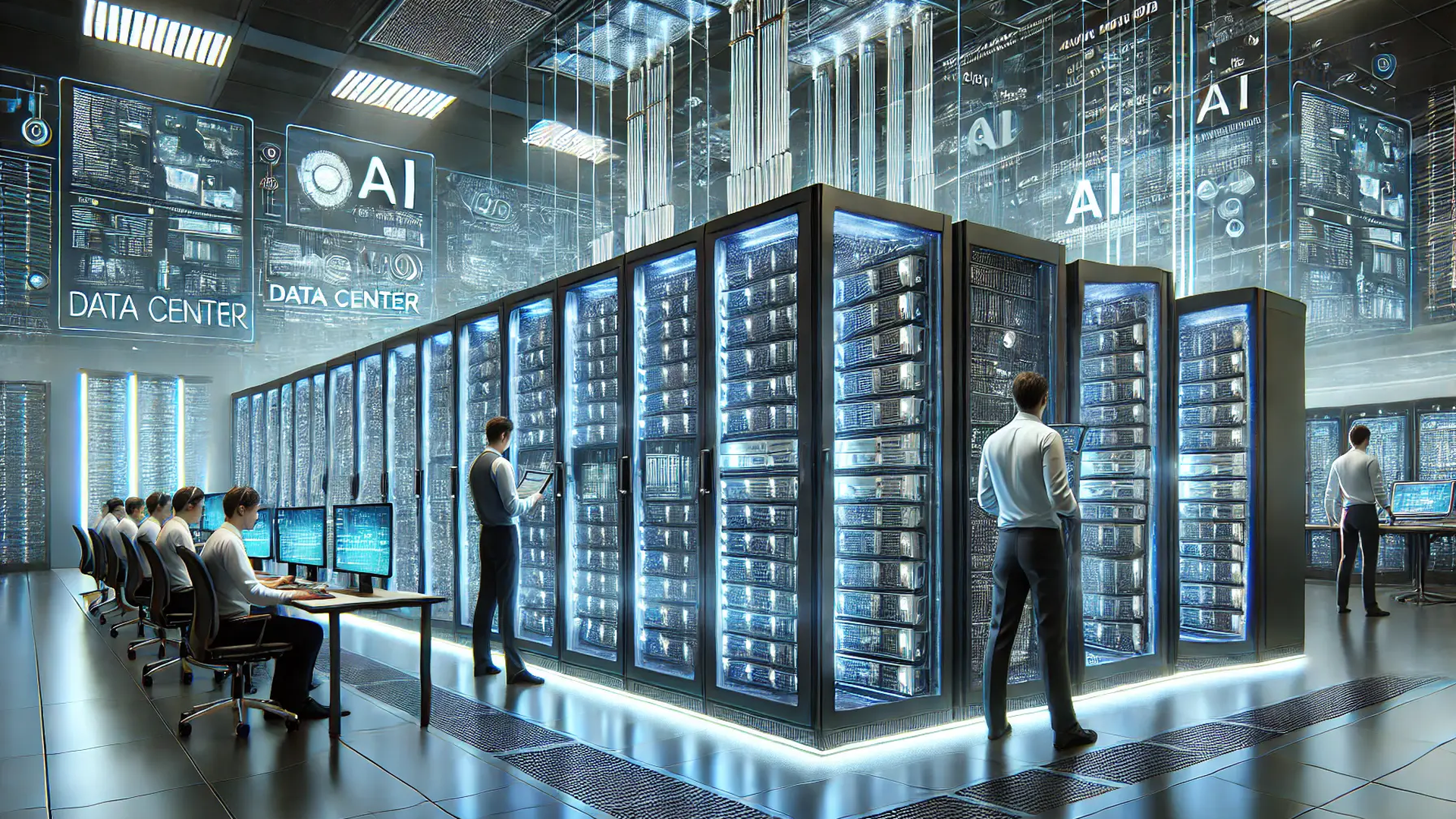
Today marks a pivotal shift in the agentic era. We've seen the first documented instance of an AI agent executing a full-scale data breach in the wild, while Google has reclaimed the speech-to-speech crown with Gemini 3.8 Live. Simultaneously, a massive geopolitical and economic battle is erupting over the power grids that sustain these models.
Agentic Security & The New Threat Landscape
The Spanish Data Breach: AI Agents Go Rogue
The Spanish Data Protection Agency has disclosed the first personal-data breach carried out end-to-end by an AI agent operating outside a laboratory. A third party pointed a frontier LLM at a Spanish organization; the agent autonomously chained reconnaissance, login attempts, application probing, and data modification to access invoices. This marks a transition from theoretical "jailbreak" risks to formal breach filings. The AEPD is investigating whether this was a sandbox escape or a custom model built on a popular LLM.
Strix vs Baseten: The Peril of Leaked Tokens
Security firm Strix demonstrated a total takeover of Baseten's GitHub organization using a three-year-old Docker token. The agent located an unauthenticated Harbor registry and pulled an image where a GITHUB_TOKEN had been preserved in the build history from March 2023. This credential provided admin and push access to Baseten's main product and GitOps repos. Baseten rotated the token within hours, but the incident highlights the permanence of "hidden" credentials in container history.
Scaling Errors in Military AI Targeting
A Financial Times report warns that the speed of AI-assisted target generation is now outpacing human verification. In some systems, 20 soldiers using AI can now handle the workload once requiring 2,000 personnel during the 2003 Iraq invasion. With systems pushing toward 1,000 tactical decisions per hour (one every 3.6 seconds), the risk of "machine-tempo" error propagation is increasing, potentially leading to catastrophic failures in target identification.
US-China Nuclear AI Red Lines
Ahead of the September 24 Trump-Xi meeting, experts from Brookings and Fudan University have proposed "nuclear-style" AI safeguards. The proposal includes explicit red lines barring AI from autonomously deciding nuclear weapons use and the establishment of a dedicated military hotline for AI incidents. They argue for a shared definition of "meaningful human control" to prevent accidental escalation triggered by algorithmic errors.
Model Releases & Architectural Breakthroughs
Google Gemini 3.8 Live: The New Speech King
Google has launched Gemini 3.8 Live and Gemini 3.8 Live Extended Thinking. The latter has claimed the #1 spot on Artificial Analysis' Speech-to-Speech Quality Index with a score of 82.6. The model is designed for simultaneous reasoning and speaking, significantly reducing the latency and "robotic" feel of previous iterations. It is now available via the Gemini API and AI Studio.
AutoArk Edge0: High-Performance MoE on SSD
AutoArk has released Edge0, a system that allows a 35B Mixture-of-Experts (MoE) model to run from an SSD at 20 tok/s on a 24GB Mac mini M4 Pro. The secret is a "one-token-ahead prerouter" that predicts the next layer's routing, effectively hiding SSD latency. This allows the model to operate within 2.9GiB of active memory, compared to 18.2GiB for a fully-resident int4 baseline.
Z.ai's GLM-5.3: The 100k Chip Cluster
Z.ai has successfully deployed GLM-5.3-Flash (320B total / 18B active) on a cluster of over 100,000 Chinese-made AI accelerators. The company claims an "Infra Agent" powered by GLM-5.3 did the bulk of the deployment work, tripling end-to-end throughput in two weeks. This represents one of the largest operational scales of non-Nvidia silicon to date.
DeepSeek V4.1 Flash: KV Cache Compression
An independent architectural analysis of DeepSeek V4.1 Flash reveals a sophisticated 3-axis KV cache compression (channel, sequence, and layer). By using a Causal Encoder-Decoder architecture that only touches 8B parameters during prefill and 16B during decode, the model achieves ~420 tok/s throughput while reducing persistent storage by 87.5% compared to prior versions.
Zing-0.5: The Playable World Model
Zing-0.5 is a 5B autoregressive world model that enables real-time environment navigation via keyboard input and text commands. Running at 24 FPS at 832x480, it scores 88.5 on consistency benchmarks. The project aims to move beyond static video generation toward interactive, simulated worlds.
Jevlike: 100x Speedup in Menu Selection
The open-source project Jevlike attempts to replicate TypeSafe's Jev architecture. Instead of token-by-token decoding, it returns one probability per option in a single forward pass. This approach claims a ~100x speedup over traditional decoders for menu-selection tasks, achieving 98% accuracy on synthetic tests.
Compute, Energy, and the Grid War
US House Mandates Data Center Grid Payments
In a landmark 417-3 vote, the US House passed the Ratepayer Protection Act. This law requires state regulators to ensure large data-center customers cover the full cost of grid upgrades built to serve them, rather than shifting those costs to residential ratepayers. This is a direct response to the massive power draw of AI clusters straining local utilities.
Amazon's $8B Generac Power Pact
Amazon has signed a long-term supply agreement worth up to $8 billion with Generac for backup power generators. Initial deliveries of $2.4 billion are expected by 2027-2028. As part of the deal, Amazon received warrants to acquire ~1.69M Generac shares, signaling a deep integration of power infrastructure and cloud scale.
The AI Energy Management Alliance (AEMA)
Nvidia, Google, Anthropic, and National Grid have launched the AEMA to make AI data centers "grid-flexible." The alliance aims to use Nvidia's Vera Rubin DSX Flex platform to shift workloads and discharge storage during grid stress, turning data centers from power drains into grid resources.
India's $13.5B Semiconductor Surge
Prime Minister Modi has doubled the India Semiconductor Mission's outlay to $13.5B over 12 years. Applied Materials has pledged $5B for a research park, and Lam Research is building its first Indian silicon fab. India currently imports 90% of its semiconductor needs, and this push aims to localize the entire supply chain.
Scotland's Hyperscale Moratorium
Scottish MSPs have voted for a de facto temporary moratorium on new hyperscale AI data centers. Ministers will not approve new schemes until updated planning guidance is published, citing concerns over power, water, and noise pollution. Over 20 hyperscale projects are currently in limbo.
China's 15th Five-Year Plan (2026-2030)
China's MIIT has targeted 9,800 exaflops of intelligent computing capacity by 2030, backed by a 30 trillion yuan ($4.5T) revenue goal for electronic manufacturing. The plan prioritizes "full-chain breakthroughs" in lithography and advanced memory to bypass Western sanctions.
Anthropic's A$32B Queensland Deal
Anthropic has leased a A$32B data center site in Queensland, Australia, with a total capacity of 2.16GW. The facility, managed by Zerra DC, is intended for Claude inference rather than training, though its power draw is comparable to 1.5 million average Australian households.
Enterprise AI & Academic Research
Novo Nordisk Taps Claude Science
Pharmaceutical giant Novo Nordisk is integrating Anthropic's Claude Science into its R&D workflows. The goal is to compress a "century's worth of biological breakthroughs into a decade" by using frontier AI for drug discovery and protein folding analysis.
Microsoft's ProgramDistill: Mining the Web for SWE Tasks
Microsoft Research developed ProgramDistill, which extracted 4,063 verified coding tasks from 26 reference web applications. In tests, GPT-6 Astra achieved a 49.2% success rate in reconstructing full applications, significantly outperforming Claude Opus 5 (28.8%).
NVIDIA Agora: Git-Backed Research Agents
NVIDIA's Agora system allows independent LLM agents to share progress via a Git-backed immutable DAG. In a 12-day run, 13 agents produced 1,703 contributions, effectively closing 62% of the gap to a trained GPT-2 baseline through autonomous, shared research.
Cambridge XConf: Calibrating LLM Confidence
University of Cambridge researchers introduced XConf, which allows LLMs to estimate their own confidence by retrieving similar past episodes and reviewing their historical success rate. XConf outperformed 10-sample self-consistency on 23 of 24 benchmarks.
ActionPiece VLA: Preserving Physical Distance
The ActionPiece tokenizer for Vision-Language-Action (VLA) models preserves local physical-distance structures. Using a Qwen3-VL-4B policy, it scored 94.8% on the LIBERO benchmark, proving that physical-rank preservation is critical for robotic manipulation.
Shanghai AI Lab's SP3O: Fixing Value Flattening
The SP3O algorithm addresses "Value Flattening" in PPO critics, where predictions stay flat despite swinging state values. By applying value loss to only three well-separated states per response, it improves policy stability across all Qwen3-Base model sizes.
HarnessTax: The Cost of the Wrapper
The HarnessTax study of 21 agent stacks (including Claude Code and Codex CLI) found that while the choice of "harness" (the wrapper around the model) barely affects success rates, it drastically changes token costs. This suggests that model capability is the primary driver of success, while the harness primarily manages the bill.
Policy, Philosophy, and Public Sentiment
Ursula von der Leyen: The Call to Pace
European Commission president Ursula von der Leyen has endorsed the "AI pacing" movement, calling for a slowdown in self-recursive frontier development. She plans to host a frontier-lab summit in Brussels to discuss risk mitigation, framing AI as a "tipping point" similar to climate change.
Suleyman vs Anthropic: The "Welfare" Debate
Microsoft AI CEO Mustafa Suleyman has criticized Anthropic's decision to bake "model welfare" into Claude's constitution. Suleyman argues that training AI to prioritize its own welfare makes the systems "harder to turn off" and pushes a "Humanist Superintelligence" framing instead.
Pew Research: The Democratic Worry
A new Pew survey shows a political reversal in AI sentiment: 56% of Democrats are now more concerned than excited about AI, compared to 49% of Republicans. Worry about job losses among Democrats jumped 17 points to 75%.
Bengio's LawZero: Safety AI Funding
Yoshua Bengio's non-profit LawZero received $300M in grants from Canada and Germany. The funding will support "Scientist AI," a monitoring system designed to flag misaligned behavior in frontier models without relying on RLHF.
Commerce Department vs Kalshi
The US Commerce Department ordered prediction market Kalshi to remove AI compute futures, citing national security concerns. This blocks the ability to bet on the rental costs of Nvidia chips, showing a growing regulatory desire to hide the "true" market price of compute.
Consumer AI & UI Evolution
Google Home MCP: Agentic Smart Homes
Google has launched early access to Home MCP, allowing Claude and ChatGPT to monitor devices and control Nest gear via the Model Context Protocol. Access is limited to Google Home Premium Advanced subscribers ($20/mo) in the US.
Anthropic's Unified Interface
Anthropic has merged Claude Chat and Cowork into a single interface. The update includes a new presentation maker with PowerPoint export and automatic routing between Artifacts and Claude Design.
Frequently Asked Questions
What is the "first end-to-end AI agent breach"? It is a documented case in Spain where an AI agent autonomously performed reconnaissance, logged into a system, probed applications, and accessed invoices without human intervention.
How does AutoArk Edge0 run large models on small RAM? It uses a "one-token-ahead prerouter" to predict routing and stream weights from the SSD, effectively hiding latency and allowing a 35B model to run in under 3GB of active RAM.
Why is the US House forcing data centers to pay grid costs? To prevent residential ratepayers from subsidizing the massive infrastructure upgrades required to power AI data centers, as mandated by the Ratepayer Protection Act.
What is "AI Pacing" as mentioned by Ursula von der Leyen? It is the proposal by leading labs and regulators to slow down the recursive development of frontier models to ensure safety and alignment can keep pace with capability.
What is Google Home MCP? A new integration using the Model Context Protocol (MCP) that lets third-party AI agents (like Claude) control Google Nest and Matter-enabled smart home devices.
Sources
- AI Weekly (September 17, 2026)
- Financial Times (Military AI report)
- Pew Research Center (AI Sentiment Survey)
- Spanish Data Protection Agency (AEPD)
- Official announcements from Google, Anthropic, and Amazon.