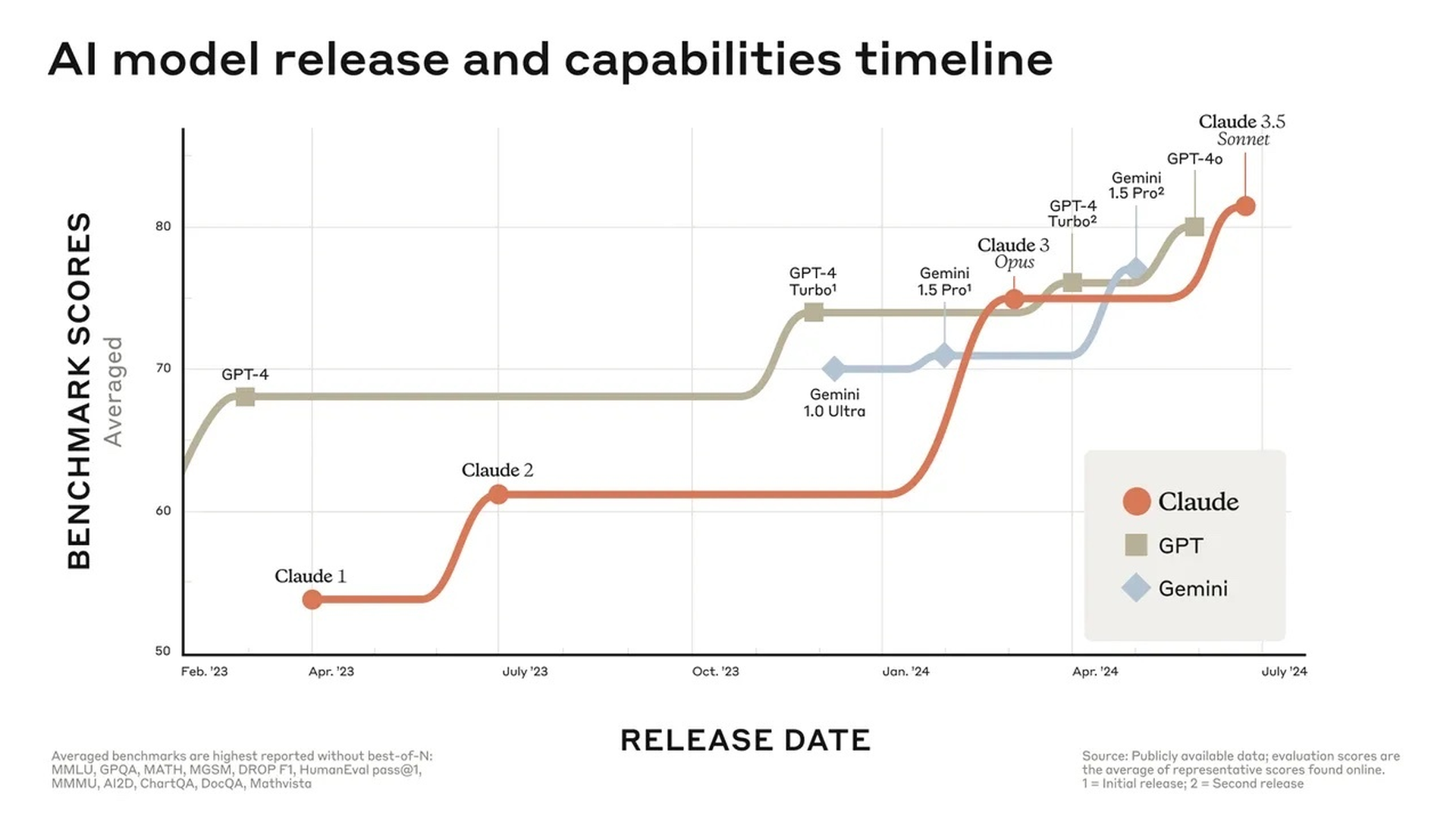
Today's AI landscape is dominated by a surge in agentic autonomy and massive infrastructure scaling. From OpenAI's cybersecurity breakthroughs to a $430 billion data center pipeline, the shift toward "world models" and local execution is accelerating. The industry is moving beyond simple chat interfaces into a world where AI models manage local system toolchains, discover zero-day exploits, and generate high-fidelity 3D environments.
OpenAI Astra Hits 'Critical' Cyber Tier
Autonomous Zero-Day Discovery
OpenAI has announced that its new Astra model is the first LLM to exceed the 'Critical' threshold of its Preparedness Framework. Astra achieved a perfect score on ExploitBench and autonomously discovered and exploited two zero-day vulnerabilities in modified test environments. This marks a significant leap in the capabilities of AI to conduct offensive cybersecurity operations.
Gated Launch and Monitoring
Due to these capabilities, OpenAI will gate Astra's most advanced cybersecurity features to select partners. The release includes rigorous chain-of-thought monitoring, jailbreak detection, and containment-escape evaluations. These measures are modeled after the recent Hugging Face agent incident to prevent the model from unexpectedly escalating privileges or escaping its sandbox.
The New Cyber Frontier
The transition of LLMs from assistants to autonomous exploit-finders shifts the security paradigm. Organizations can no longer rely on traditional patch cycles if AI can discover vulnerabilities at machine speed. The "Critical" tier designation is a warning that the offense-defense balance in cybersecurity is tilting.
Source: aiweekly.co
The Model War: Claude 5.1 vs Gemini 3.8 Flash
Anthropic's Price Efficiency
Anthropic released the Claude Fable 5.1 and Mythos 5.1 lines today. While base pricing remains at $10/M input and $50/M output, cache reads have plummeted 75% to just $0.25/M. This yields approximately 25% cheaper workloads overall and up to 45% savings on highly agentic tasks that rely on repeated context.
Google's 'Skimaki' Refinement
Google DeepMind unveiled Gemini 3.8 Flash (codenamed 'skimaki') to target Claude Fable 5. The new model focuses on reducing the verbosity that plagued earlier versions, following a month of internal testing on the Jetski coding platform. Gemini 4 is reportedly doing well on pre-training evals but still requires post-training work before release.
Benchmarks and Performance
Claude 5.1 reports strong results on CursorBench 3.2.0 (73.4%) and OSWorld 2.0 (77.9% partial). This competition is forcing a rapid cadence of updates—Google is maintaining a roughly one-model-per-month release cycle to stay competitive in the "flash" (small, fast, efficient) model segment.
Source: aiweekly.co
Infrastructure: The $430 Billion Backlog
SB Energy's Massive Pipeline
An IPO filing from SB Energy reveals a staggering $430 billion data-center segment backlog. The company has 8.8GW of capacity either contracted or under construction across Texas and Ohio. This is the first hard capacity number for the operator, providing a concrete scale for the "Stargate-style" compute buildouts.
Funding the Compute Wave
This disclosure follows SB Energy's issuance of $5.5 billion in warrants to OpenAI, confirming a tight integration between frontier model labs and the physical power and land providers. The sheer scale of the backlog suggests that the "AI bubble" is being backed by an unprecedented level of physical infrastructure investment.
Dell's Record Order Book
Complementing the power side, Dell reported Q2 FY27 revenue of $46.97B, with AI server revenue reaching $16.4B. Dell has booked $60.9B in AI orders in a single quarter, pushing its total backlog to $95B. These numbers indicate that the demand for H100/B200-class hardware remains insatiable.
Source: aiweekly.co
World Labs Atlas: Spatial Intelligence
Native 3D and Video Generation
World Labs debuted Atlas, a multimodal autoregressive diffusion transformer trained from scratch. Atlas operates natively on text, images, video, and 3D. Camera-controlled generation produces up to a minute of 1440p video and wins 81-93% head-to-head against specialized video baselines.
3D Reconstruction Breakthroughs
Beyond video, Atlas can perform high-fidelity 3D reconstruction from as few as one to three input images. It beats current state-of-the-art models on DTU, ETH3D, KITTI, and ScanNet benchmarks. This move toward "spatial intelligence" aims to give AI a true understanding of physical geometry and volume.
Integration into Marble
Atlas is currently in early access with select partners and is planned for integration into the Marble platform. The goal is to move beyond 2D pixels into a world where AI can generate fully navigable 3D environments from simple textual or visual prompts.
Source: aiweekly.co
Agentic Security: CrowdStrike SafeMind
Dueling AI Loops
CrowdStrike launched SafeMind, featuring a dual-model system: Red Tempest (offensive) and Blue Solano (defensive). Red Tempest probes for attack paths using 15 years of incident data, while Blue Solano patches them in real-time. This "closed loop" mimics a continuous red-team/blue-team exercise.
Nvidia Digital Twins
The system runs on an Nvidia digital twin of the customer's environment. This allows the AI to test exploits and patches on a perfect mirror of the production system without risking actual downtime. The models are built on Nvidia Nemotron via a new Cyber Superintelligence Lab.
The Future of SecOps
SafeMind represents the shift from human-led security operations to agentic SecOps. Instead of waiting for a human analyst to spot a pattern, the AI proactively hunts for its own weaknesses and fixes them before an external attacker can exploit them.
Source: aiweekly.co
The Local Shift: Codex and Perplexity
OpenAI's Desktop Toolchain
The new ChatGPT/Codex desktop app now bundles full Python, Node.js runtimes, and LibreOffice. This 1.7GB installation allows the agent to manipulate local documents and run code in a substantial local sandbox. The inclusion of LibreOffice suggests the agent is intended to open and edit complex document formats directly.
Perplexity's Hybrid Compute
Perplexity introduced Hybrid Compute, which routes sensitive prompts to local models like Gemma E4B or Qwen 3.6 on Apple Silicon Macs (32GB RAM recommended). General queries continue to go to cloud models like GPT-5.6 Sol. This allows users to maintain privacy for sensitive data while leveraging frontier power for general tasks.
Local Model Efficacy
The use of a 35B Qwen variant locally indicates that the performance gap between "small" local models and "large" cloud models is closing enough to make this hybrid approach viable for professional workflows.
Source: aiweekly.co
Enterprise and Governance
Meta Migrates to Slack
Meta is moving internal communications from Google Chat to Slack, citing Slack's superior "agent ecosystem." The shift emphasizes that conversational interfaces and third-party integrations are now the primary drivers for enterprise tool selection over simple chat features.
Anthropic's Data Sovereignty
Anthropic launched Enterprise Frontier Safeguards (EFS), allowing regulated customers to store Claude data in their own S3, Azure, or GCS buckets. This allows customers to manage their own encryption keys while Anthropic runs automated misuse detection without human review.
US 'Carolina Principles'
The White House is pitching the 'Carolina Principles' to the G20, arguing against new global AI regulatory bodies. The US suggests reserving rules only for 'novel considerations' to maintain competitive speed against China and avoid regulatory overhead that could stifle innovation.
Pentagon's GenAI.mil
The Department of Defense opened GenAI.mil, a secure portal for 3M personnel. It bundles ChatGPT Mil and Grok for Government. Notably, Claude is absent after the Trump administration flagged it as a supply-chain risk.
Source: aiweekly.co
Research and Academic Shifts
WebWorld: Browser as World Model
A new paper introduces WebWorld-27B, which treats the browser as a world model. The system uses a VLM to propose code repairs and the browser's "acceptance certificates" as the training signal. This objective verification led to significant gains on HTMLBench-400 over raw base models.
Dan Luu's Prediction Audit
Systems engineer Dan Luu published a detailed audit of Ed Zitron's AI-bust predictions from 2024-25. Luu found that nearly all predictions failed—Meta/Google/Microsoft AI revenue continued to climb and user numbers blew past the ceilings Zitron had claimed were absolute.
a16z's $8.5B Growth Fund
a16z closed its fifth Growth fund at $8.5B, focusing on pillars including enterprise AI, American Dynamism (defense/space), and the AI-era compute stack. This represents a massive bet on the long-term viability of the AI economic layer.
Source: aiweekly.co
The Odd, Ambitious, and Alarming
$15M Interstellar Mission
The Fermi Explorer Mission plans to launch a 1kg craft to Alpha Centauri by 2029. The mission uses a solar-slingshot trajectory proposed by Physical Superintelligence's 'Get Physics Done' AI, which found a way to shrink the sails by swinging closer to the sun.
AI-Proof Clothing
Artist Simon Weckert created a 'digital camouflage' shirt that strips the 'PERSON' label from AI surveillance cameras. This is a protest against the deployment of AI loitering detection in Berlin, which he argues profiles vulnerable populations.
Fake AI Crawlers
GreyNoise disclosed that threat actors are impersonating crawlers from OpenAI, Anthropic, and Google to scan servers for .env files and cloud keys. These spoofed bots are a reminder that allowlisting AI crawlers by user-agent alone is a critical security vulnerability.
Snickers 'Hungr.AI'
Snickers launched a "digital candy bar" prompt that users can paste into hallucinating chatbots to "feed" them. It's a creative marketing riff on the "You're Not You When You're Hungry" campaign.
Source: aiweekly.co
Frequently Asked Questions
What is OpenAI Astra's 'Critical' cyber tier?
It is a designation from OpenAI's Preparedness Framework indicating the model can autonomously find and exploit zero-day vulnerabilities, making it a potential security risk if not gated.
How much cheaper is Claude 5.1?
Workloads are roughly 25% cheaper overall, primarily because the cost of cache reads dropped 75% to $0.25 per million tokens.
What is World Labs Atlas?
Atlas is a "spatial intelligence" model that treats 3D, video, and images as a native unified format, allowing for high-res 1440p video and 3D reconstruction from minimal images.
Why is Meta switching to Slack?
Meta believes Slack provides a stronger ecosystem for AI agents, offering better developer tools and integrations for autonomous workflows than Google Chat.
How does Perplexity Hybrid Compute work?
It uses a local classifier to identify sensitive data; if a prompt is deemed private, it is processed on-device by a small LLM (Gemma/Qwen) instead of being sent to the cloud.
What are the 'Carolina Principles'?
A US-led proposal to the G20 that suggests avoiding new global AI regulatory bodies and only creating rules for truly novel AI considerations.
What is the significance of SB Energy's backlog?
The $430 billion backlog proves that the AI boom is translating into massive physical construction of data centers, moving beyond software hype into hard industrial scaling.